Last updated November 20, 2026
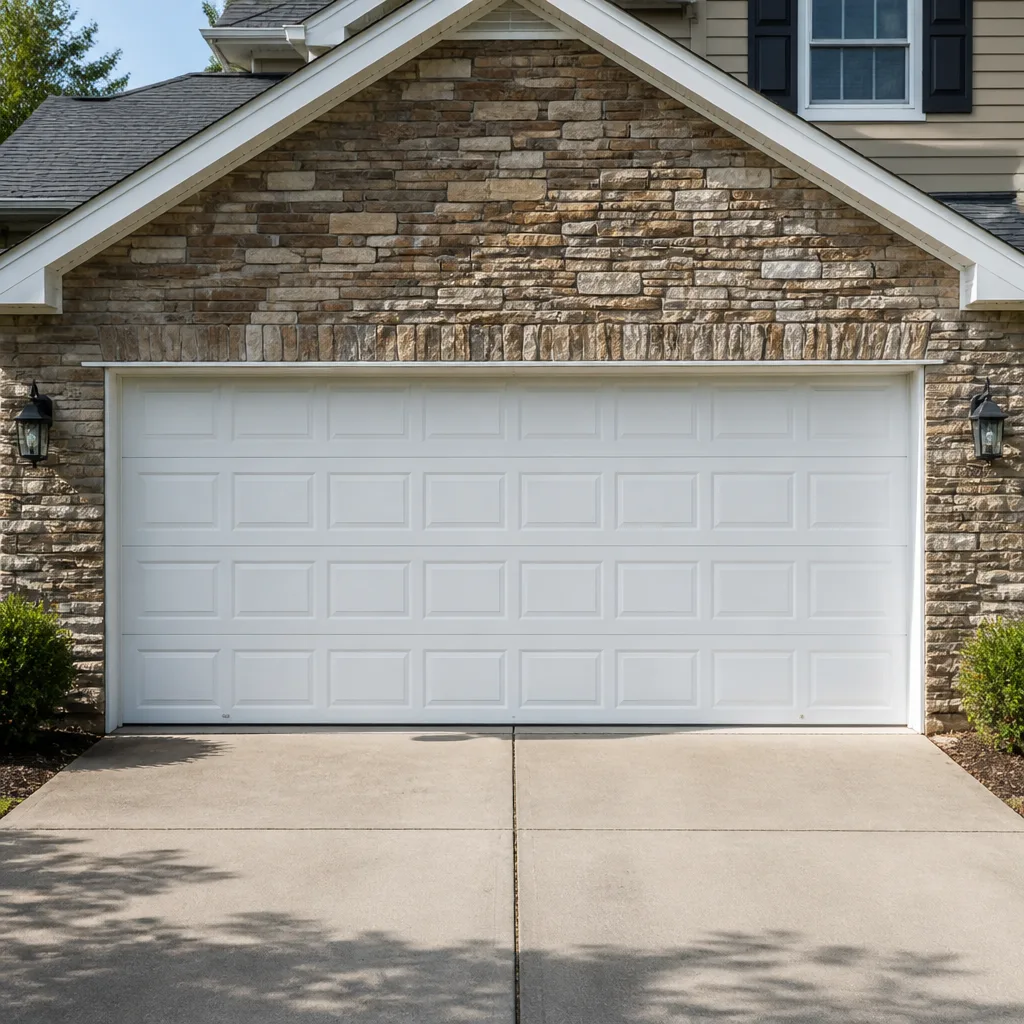 Raised-panel steel
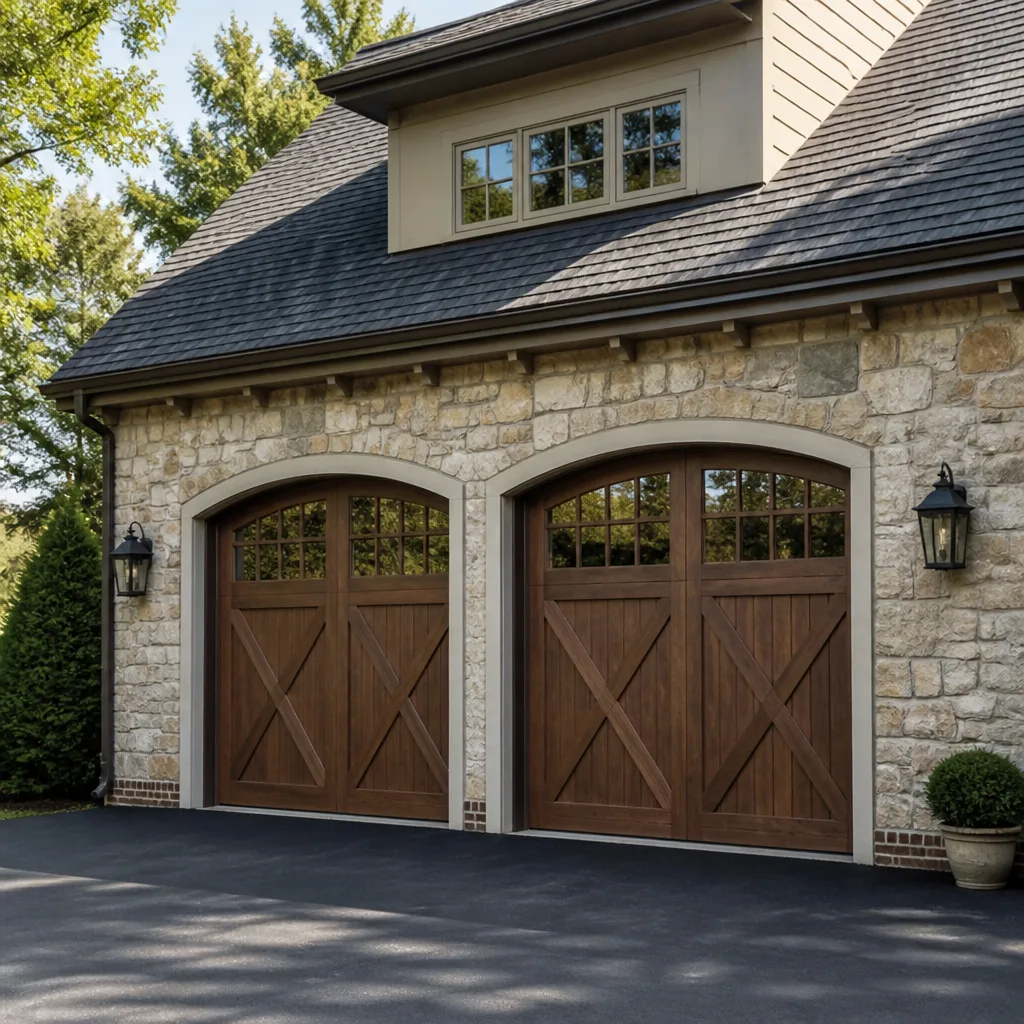 Carriage house
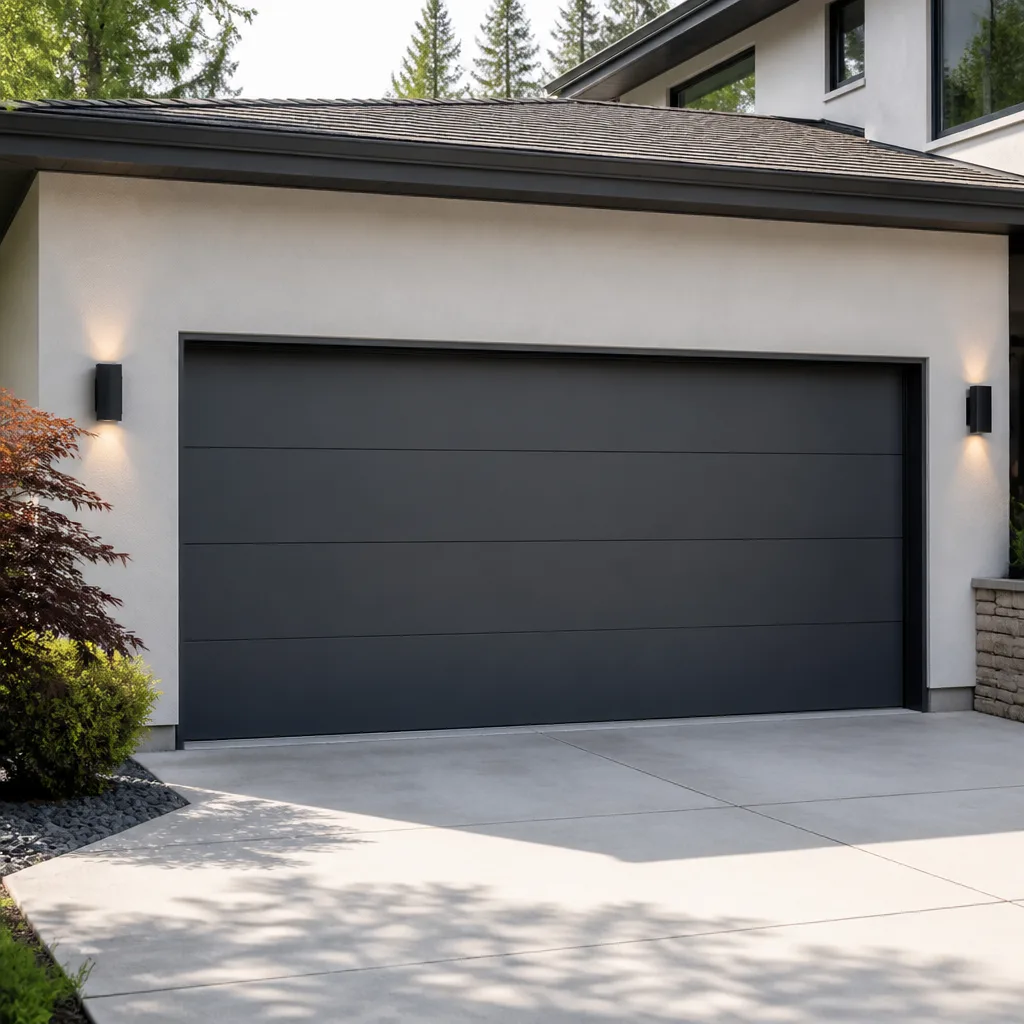 Modern flush
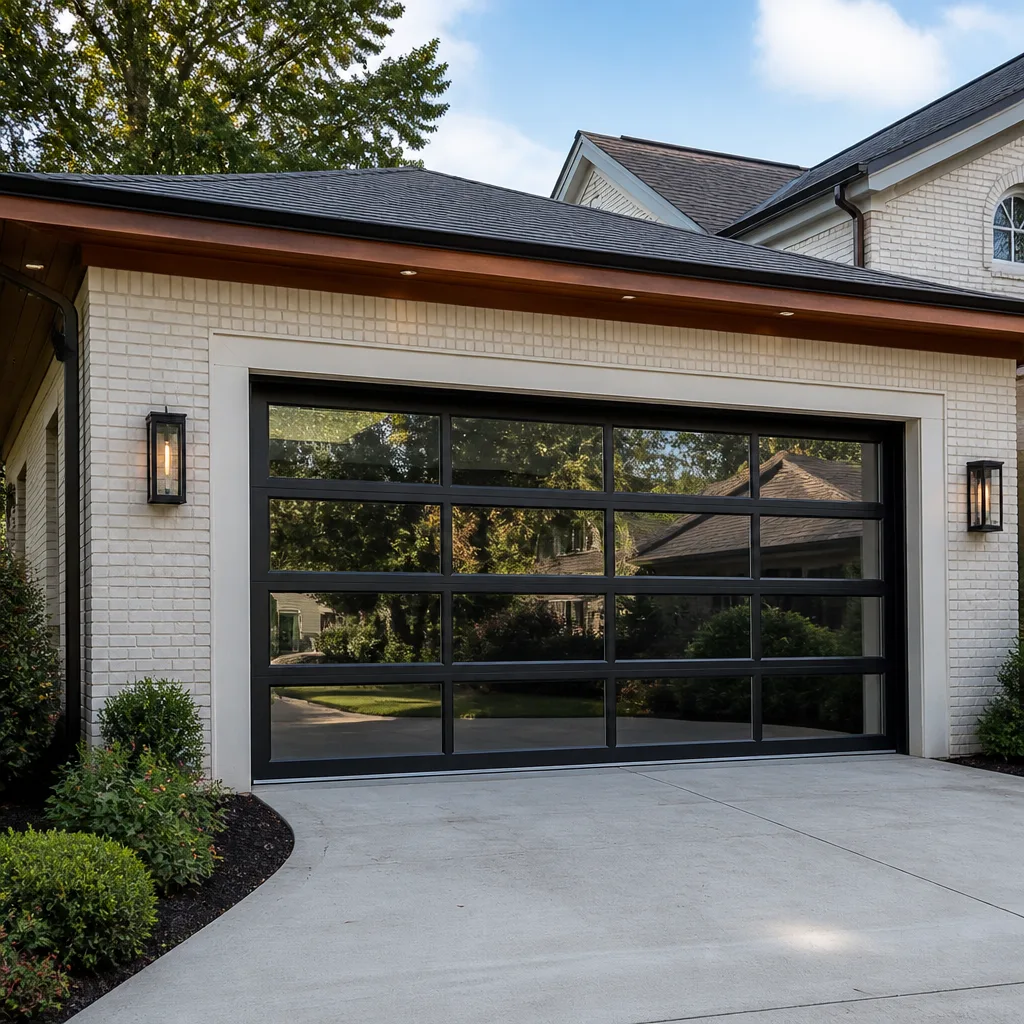 Full-view glass
 LiftMaster openers
 Chamberlain openers
Full 25-point door and opener safety check with every visit - springs, cables, rollers, tracks, and your LiftMaster or Chamberlain opener included
You get a price before we start. It does not change when the pro arrives.
Get your free estimateGarage Door Permits, Codes & Inspections in Deerfield Beach, FL: What You Need to Know
Most homeowners assume a garage door is just a big moving panel and that swapping one out is no different from replacing a light fixture. That assumption is where trouble starts. In Deerfield Beach, a full garage door replacement is a permitted structural change under the Florida Building Code, and the inspection that follows is not a formality. We’ve watched plenty of homeowners learn this the hard way, usually at the worst possible moment: during a home inspection, a storm claim, or a title search. This guide walks through exactly when Deerfield Beach requires a permit, what the wind-load rules mean for which doors can legally go on your house, how the city’s Building Division actually processes the paperwork, and what to do if you discover a previous owner skipped the step.
Quick Answer
In Deerfield Beach, a full garage door replacement requires a permit and a final inspection through the City of Deerfield Beach Building Division, while like-for-like hardware repair (springs, cables, rollers, openers, hinges, panels replaced with the same rated product) generally does not. The door must meet Florida Building Code wind-load requirements for Broward County, which means it has to carry the correct product approval and pressure rating for your location. Skipping the permit can complicate a home sale, an insurance claim, or a code enforcement visit years later.
Styles & brands we work with
- Raised-panel steel
- Carriage house
- Modern flush
- Full-view glass
- LiftMaster openers
- Chamberlain openers
Table of Contents
- When does a garage door project need a permit in Deerfield Beach?
- How Florida Building Code wind-load rules shape which doors you can install
- How the Deerfield Beach Building Division processes a garage door permit
- What inspectors actually check at the final inspection
- What happens when an unpermitted door surfaces during a sale or a claim
- How to permit an existing door installation retroactively
- Repair vs. replacement: where the permit line actually falls
When does a garage door project need a permit in Deerfield Beach?
A permit is required when you replace the garage door assembly or change its structural characteristics; it is generally not required when you repair or service the existing door with like-for-like parts. That single sentence is the heart of the whole question. The City of Deerfield Beach treats a full replacement as a structural alteration because the door participates in the wind envelope of the house. Because Broward County sits inside the Florida Building Code’s wind-borne debris region, the code cares less about the door as a convenience feature and more about the door as a component that helps keep a house sealed during a storm.
The line between “repair” and “replace” is not always obvious to a homeowner, so here is how we draw it in practice:
- No permit, typically: replacing torsion or extension springs, swapping a snapped cable, installing a new opener on the existing door, replacing rollers, hinges, or a single damaged panel with the same rated product.
- Permit, typically: installing a brand-new door, changing the door’s design or window configuration, changing from an uninsulated to an insulated model, changing the size or track layout, or replacing a door that has lost its label.
- Ask the city directly: reusing the existing tracks and hardware while swapping only the door section on a like-for-like basis. This edge case depends on the specific product approval, and the Building Division is the authority, not us and not a contractor trying to save a step.
If you’re still unsure, the simplest test is this: is the door’s rated wind performance changing, or is it staying the same? If a rated door is coming out and an identically rated door is going in, you’re usually repairing; if the answer is anything else, call the Building Division before ordering. Our crew fields this question constantly across Deerfield Beach because the town has a big mix of homes, from the older blocks near the Intracoastal to newer construction west of I-95, and the rules don’t loosen just because a job looks small on paper. If a technician diagnoses a mechanical problem, that’s the moment to ask whether it can be fixed rather than replaced: our garage door repair work is designed to keep a good door in service, which is also the answer that keeps you out of permit territory.
How Florida Building Code wind-load rules shape which doors you can install
The Florida Building Code, Chapter 16, sets the wind-load requirements that any permitted garage door in Broward County has to meet, and it works alongside the wind-borne debris provisions that govern products used in this part of the state. In plain terms: not every door sold in Florida can legally be installed on your Deerfield Beach house. The door has to carry a product approval that matches or exceeds the design pressure your location requires, and the label has to be on the door or delivered with the documentation. That is not a technicality. It’s what lets an inspector sign off, and it’s what an insurance adjuster will look for after a storm.
What this means for you in practice:
- Match the door’s rated design pressure to what your property requires, not just to what’s in stock.
- Confirm the product approval number is current and covers the specific model and size you’re ordering.
- Ask how the door will be anchored to the framing; the door’s performance depends on the mounting, not the panel alone.
- Keep the label and paperwork; a missing label is the single most common reason a garage door fails inspection.
Homeowners who already know their brand often ask whether a specific model can meet the requirement. The answer depends on the exact model and size, and we verify it before we ever quote a replacement. Amarr and Wayne Dalton both publish product approvals for their Florida-rated models, and we work with those doors often enough to know where to look. Because we stay inside garage door work, our garage door opener repair technicians and installers are used to reading approvals and matching them to the right application rather than guessing.
How the Deerfield Beach Building Division processes a garage door permit
The City of Deerfield Beach Building Division runs the permit process, and for a clean garage door replacement the sequence is more predictable than most homeowners expect. It usually follows five steps:
- Apply: the contractor submits the permit application with the scope of work, the door’s product approval, and the property details.
- Plan review: the Building Division checks that the proposed door and mounting meet code for the address.
- Permit issued: once approved, the permit is issued and a fee is paid; the fee varies by job value, so the city sets the number, not us.
- Installation: the door goes in, and the installer must follow the approved scope without making unapproved changes.
- Final inspection: an inspector visits the site, verifies the door, the label, and the mounting, and closes the permit if it passes.
The timeline is set by the city and depends on how complete the submission is. A rushed or incomplete application is the most common reason a job stalls, which is why we verify product approvals before we quote rather than after the door is ordered. For homeowners planning around the process, the practical advice is to start early and keep the paperwork together. In Deerfield Beach, that matters because a good portion of the housing stock is older, and older homes sometimes come with doors whose original documentation no longer exists. If your file is missing, tell the contractor up front: it changes how the paperwork needs to be assembled, not whether the project can proceed.
What inspectors actually check at the final inspection
A garage door final inspection is shorter than most people imagine, but it is not automatic. The inspector isn’t there to admire the door; the inspector is there to confirm the door matches what was approved and performs the job the code assigned it. Because we’ve sat through these inspections as part of our work, we know the list of items that actually get looked at:
- The label. The door’s product approval label has to be present and readable, and it has to match the approval number on the permit.
- The door itself. The model, size, and configuration must match the approved scope. A different door than the one permitted is a fail.
- The mounting. Anchoring to the framing has to be consistent with the approved application.
- Safe operation. The door has to move and reverse properly, which touches on the opener’s safety system as much as the door.
- Working condition. The door has to be installed and operating, not staged for later work.
What inspectors do not do is certify your springs, your opener, or the brand of your hardware. Those are maintenance and servicing concerns and belong to a technician, not an inspector. If you’re noticing a dragging door or a spring that has gone slack, don’t wait for a permit cycle to address it: a failing spring is a safety issue, and it needs to be treated as one. Our garage door spring repair work exists specifically because these parts are under extreme tension and demand trained handling, not a general handyman with a set of tools.
What happens when an unpermitted door surfaces during a sale or a claim
An unpermitted garage door replacement tends to stay invisible for years, then surface at a moment when you can’t easily fix it. The three most common places it comes up are the home inspection, the insurance claim, and a code enforcement visit.
During a home sale: a buyer’s inspector notes the door, and if the door’s label or the seller’s disclosure doesn’t line up, the deal can stall or the parties can end up negotiating over a permit that was never pulled. The problem compounds because title and permit records are public, so a missing permit is easy to confirm.
After storm damage: when you file a claim for damage to a garage door, the insurer can look at whether the door was installed under permit and whether it met the wind-load requirement for the address. A door that was never permitted, or that doesn’t carry the correct rating, can make the claim much harder than it should be. It may not void the whole policy, but it can shift the conversation to what’s covered and what isn’t.
Code enforcement: a permit that was needed and never obtained can be treated as a code problem, and a stop-work order is possible if work is underway. Even years after the fact, city records can trigger questions.
The common thread is that none of this is about the door being dangerous on its own. It’s about the paper trail that tells a buyer, an insurer, or a code officer that the door was installed the way it was supposed to be. In Deerfield Beach, where the housing mix runs from mid-century homes to newer builds, the paper trail often matters more than the hardware. Nobody wants to lose a sale over a garage door that works perfectly but has no record behind it.
How to permit an existing door installation retroactively
If you’ve found that a previous owner installed a garage door without a permit, the situation is fixable. The process is commonly called retroactive permitting, and it exists precisely for cases like this. It’s not a loophole; it’s the city’s mechanism for bringing an existing installation into compliance, and it usually involves a site inspection and documentation of the door that’s already there. Here’s how it tends to go:
- Check the permit history. Start with the City of Deerfield Beach Building Division and ask for the permit records for your address. Sometimes the permit exists but was never recorded properly, and you’re done.
- Identify the existing door. Look for the label on the door or the track; if it’s missing, a technician can help identify the model and rating from the hardware.
- File a retroactive permit application. The Building Division will tell you what they need for the specific installation.
- Allow an inspection. The city inspects the existing door and confirms it meets the applicable code and wind-load requirements.
- Complete any corrective work. If the door doesn’t meet code, it may need upgrading before the permit can close.
The results are straightforward: you either end up with a permit and a clean record, or you learn that the door needs to be brought up to code. Either way, you’re out of the unknown, which is where the real risk lives. Starting the process early is a lot easier than starting it in the middle of a sale. If you suspect a door was installed without a permit, you can call Deerfield Beach Garage Door Repair Pros to identify the door and help you understand what you’re working with before you contact the city.
Repair vs. replacement: where the permit line actually falls
Most of the calls we handle in Deerfield Beach are about repairing what’s already there, not replacing it. That’s partly because a door that’s been maintained is often fixable, and partly because a repair keeps you out of a permit cycle for a job that doesn’t need one. But “repair” has to mean actual repair, not a workaround. Here’s where the line falls:
- Springs: a replacement spring or a matched pair installed on the existing door is repair work, no permit. The spring is under extreme tension and should be handled by a trained technician.
- Cables and rollers: repair work, no permit. A snapped cable can whip, so treat it as a safety issue, not a parts swap.
- Openers: replacing or repairing an opener on the existing door is service work, no permit. This includes both traditional RF remotes and app-connected smart systems from LiftMaster, Chamberlain, Genie, and Craftsman.
- Panels: replacing a single damaged panel with the same rated product is repair; changing the door’s design or window layout is where you cross into replacement.
- The whole door: replacing the assembly or changing its rated performance is replacement, and that’s where a permit applies.
A repair-first approach has a practical payoff you don’t always hear about: it avoids the permit cycle unless one is actually required. Our garage door repair work is built around that idea. When a door is fixable, fixing it is the better answer for your budget and your paperwork. When it isn’t, the honest answer is that replacement is the right call, and we’ll say so. Our technicians have up to 12 years of experience with brands like Amarr, Wayne Dalton, Craftsman, and Raynor, and they can usually tell within a few minutes which side of the line a job is on.
Common Mistakes to Avoid
- Assuming a replacement never needs a permit. A garage door replacement changes the wind envelope of the house, so the permit is the city’s way of confirming the door meets code. Skipping it doesn’t make the door illegal; it makes the record incomplete, and that record follows the house.
- Letting a contractor install a door without a matching product approval. A door that’s not rated for the address’s wind-load requirement can fail inspection, and the door’s label is the only proof. Confirm the approval before the door is ordered, not after it’s bolted on.
- Throwing away the label or the paperwork. The label is the door’s ID, and it’s the first thing an inspector or adjuster looks for. If you keep anything from a garage door job, keep the label photo and the approval number.
- Buying a bargain door online and having a handyman install it. A door without the right approval for Broward County is a problem waiting to be discovered. In Deerfield Beach, the savings rarely outlast the paperwork.
- Waiting for a home inspection to find an unpermitted door. Check permit records when you buy, and if you discover a missing permit, start the retroactive process while you own the house rather than during a sale.
- Treating a broken spring as a repair to put off. Springs are under extreme tension and fail dangerously. If a spring has snapped, that’s not a problem to wait on and not a job for a general handyman.
- Assuming a storm claim covers an unpermitted door without question. Wind claims on garage doors often turn on whether the door met the applicable code at installation. Good paperwork makes that conversation much easier.
See the difference
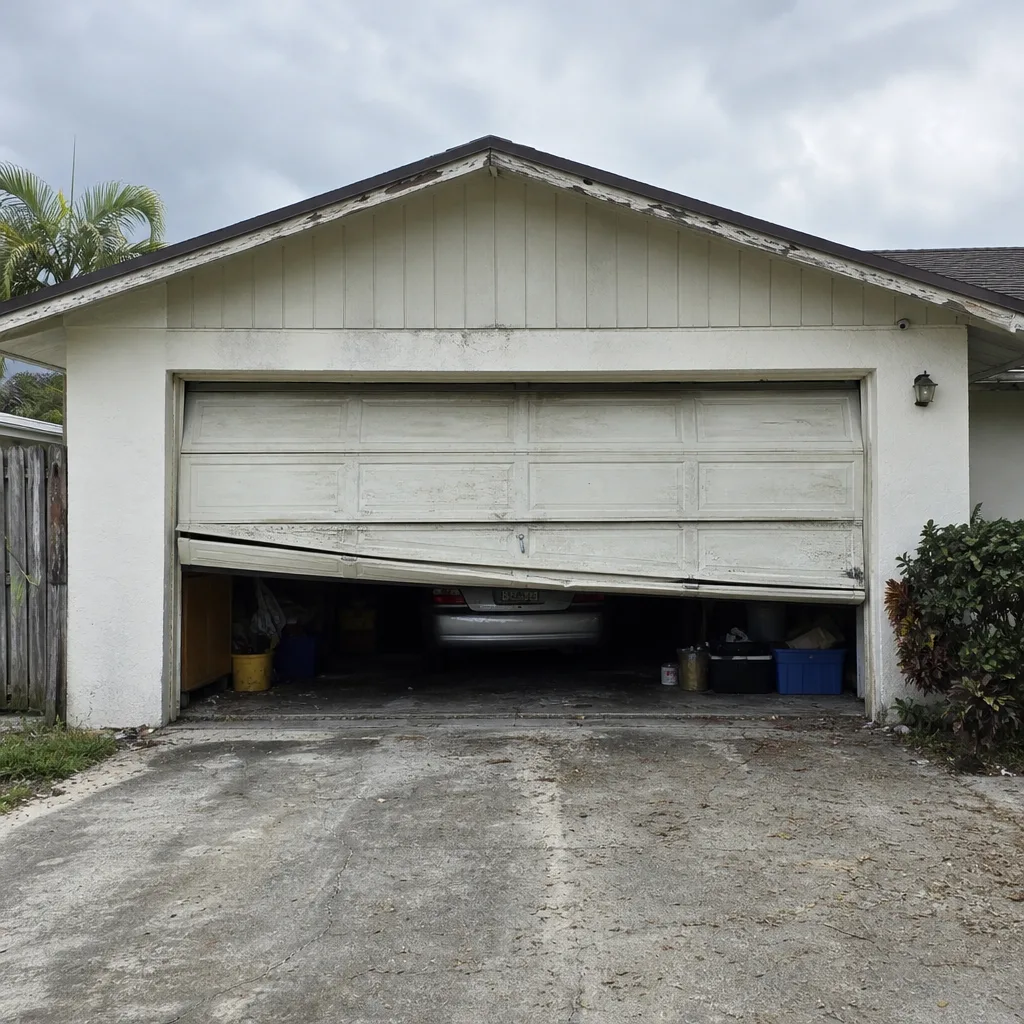 Before
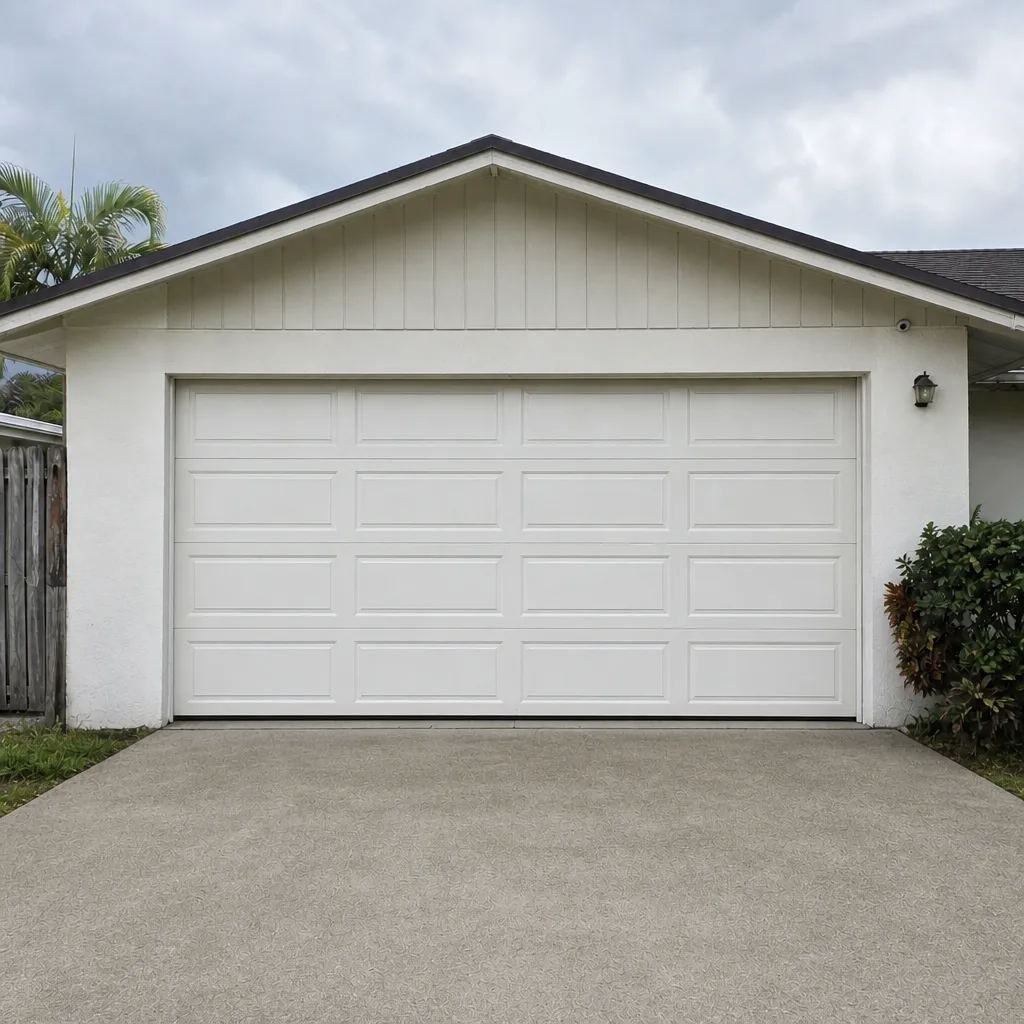 After
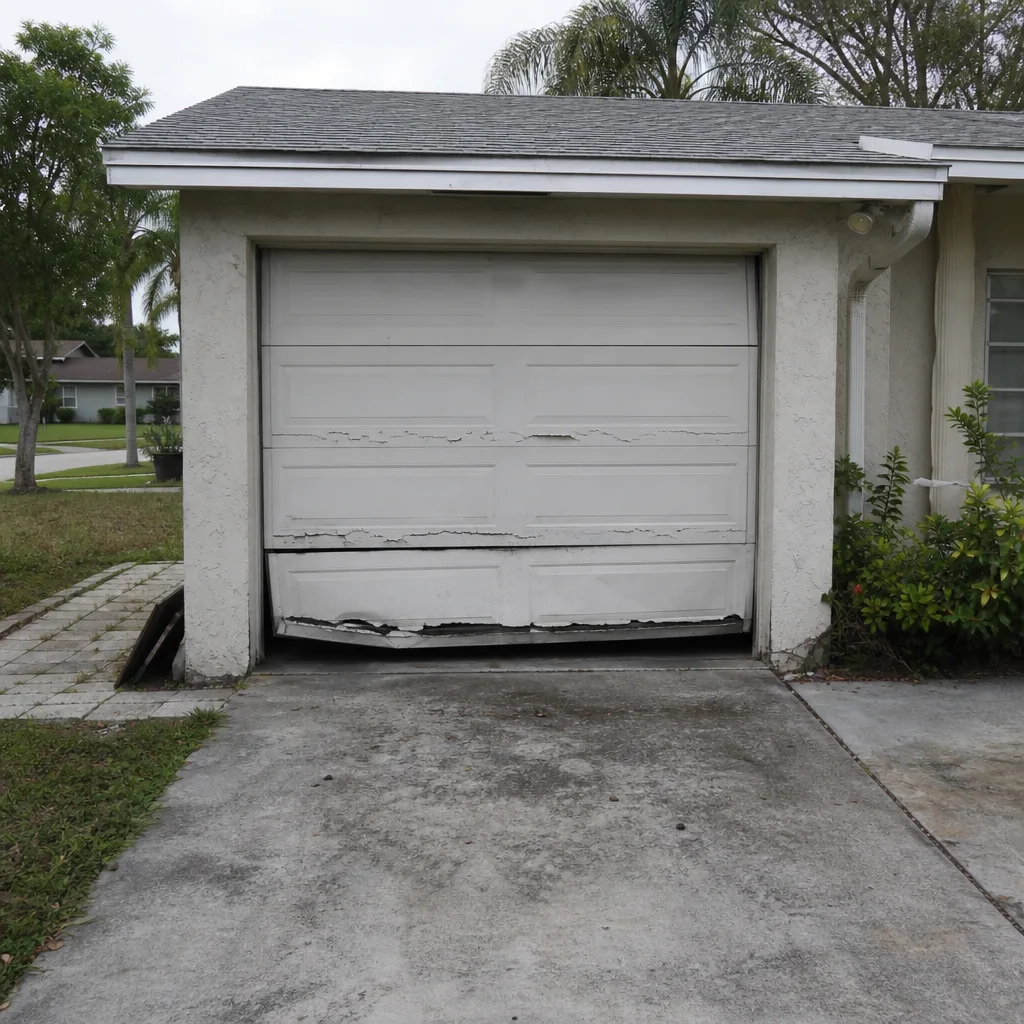 Before
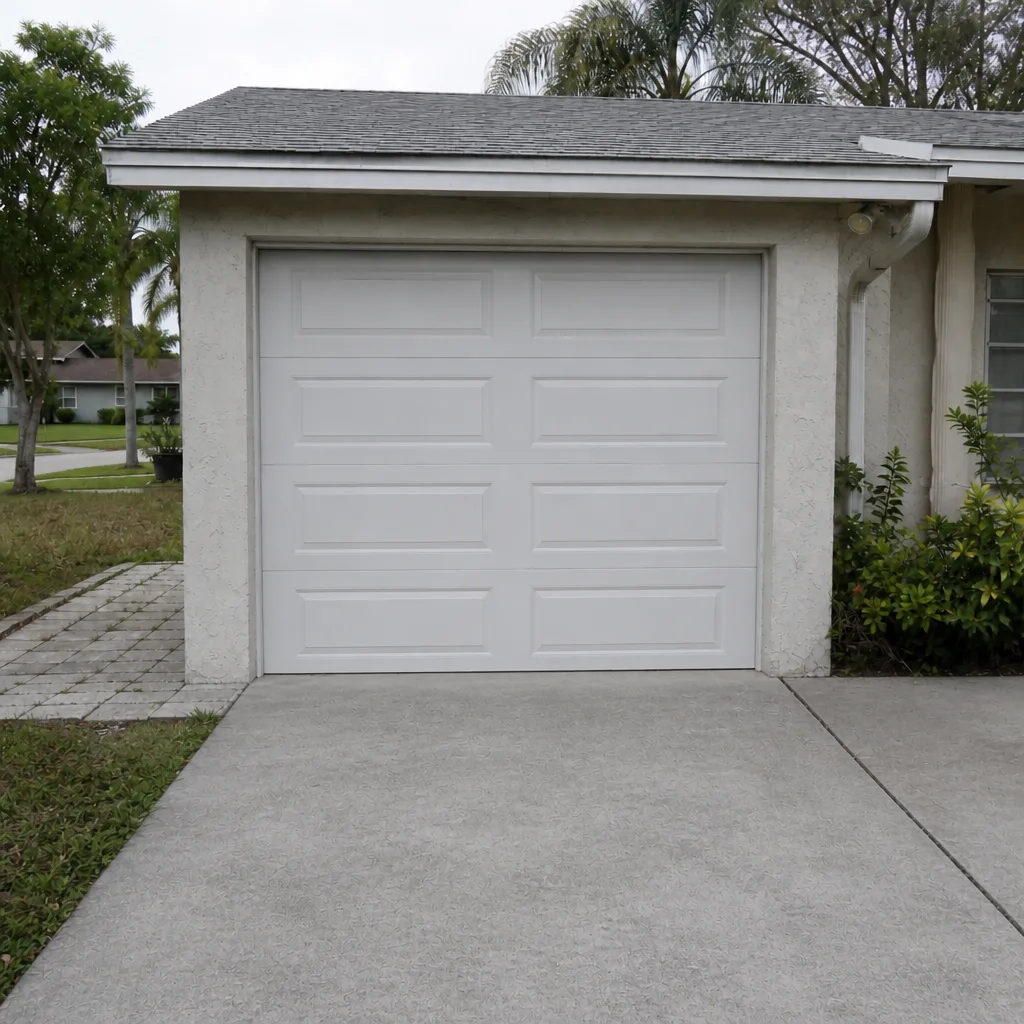 After
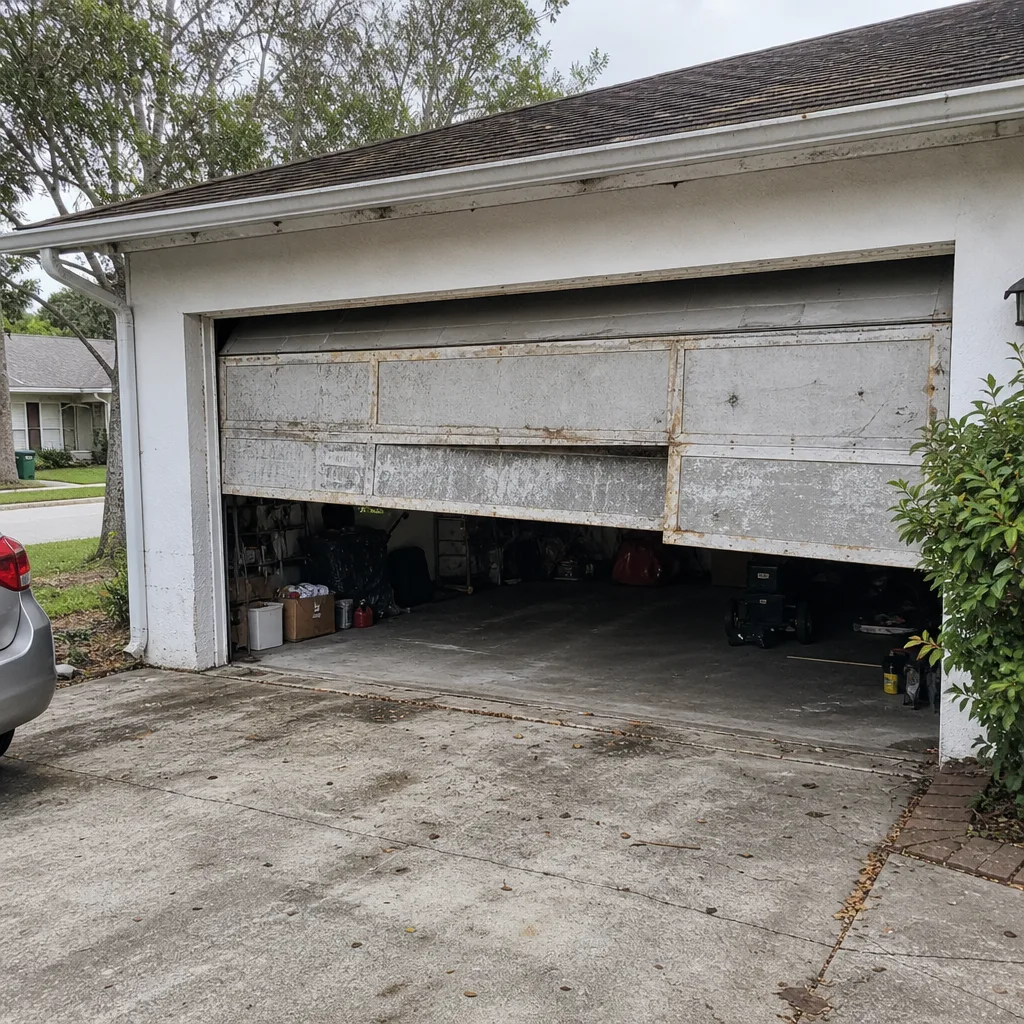 Before
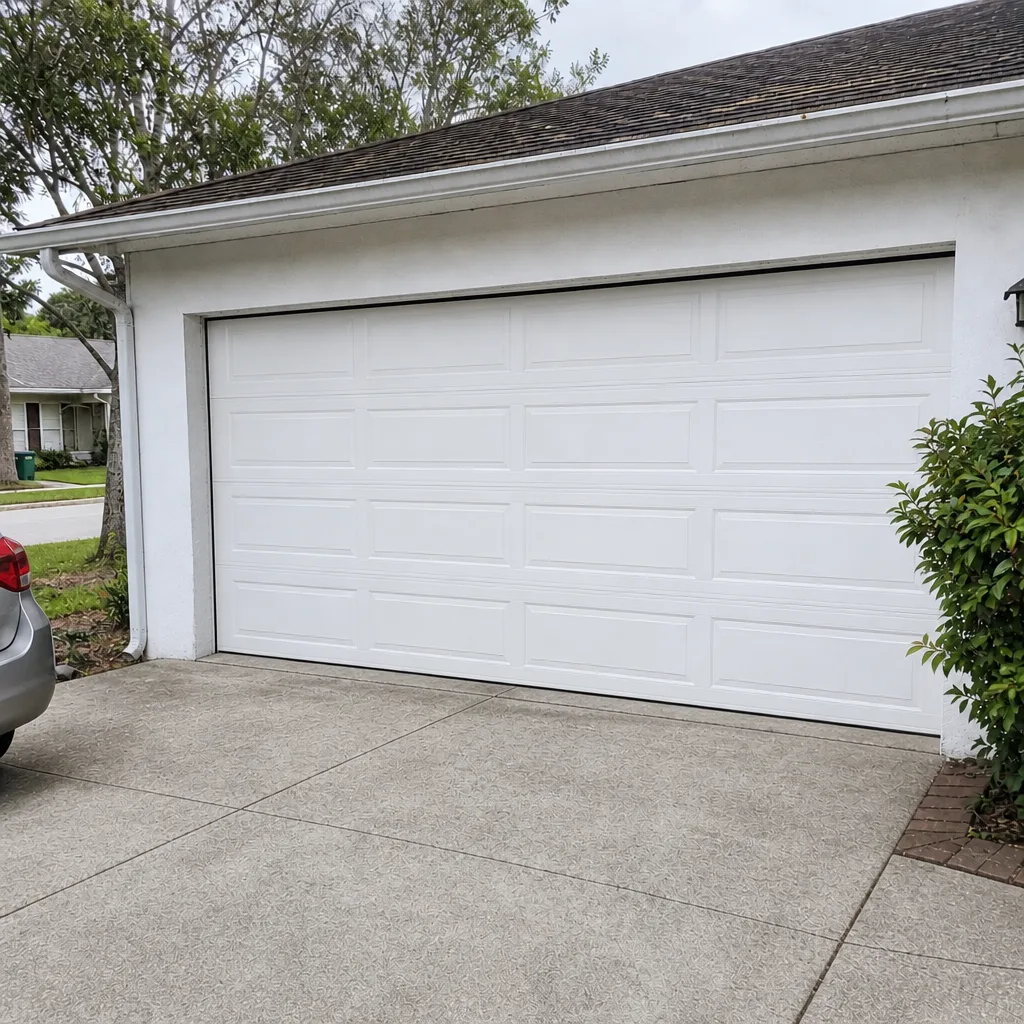 After
When to Call a Professional
Some garages need a call today, not next week. A snapped spring, a door stuck halfway, a cable that’s frayed or hanging, an opener that reverses unpredictably, or a door that’s dropped on one side all fall into that category, and none of them are safely handled by a homeowner. A door that isn’t operating correctly is also a full replacement risk, which is where the paperwork and the safety problem meet. If you’re unsure whether your job is repair or replacement, or whether it needs a permit, a straightforward diagnostic call usually settles it. Deerfield Beach Garage Door Repair Pros offers free estimates in Deerfield Beach, free of charge and with the price quoted and agreed before any work starts. We work on the brand you already have, and we’ll tell you honestly whether you’re looking at a repair or a replacement. Call (855) 210-1282 for a free estimate.
Frequently Asked Questions
In Deerfield Beach, a full garage door replacement normally requires a permit and a final inspection through the City of Deerfield Beach Building Division, while like-for-like repair of the existing door usually does not. The door also has to carry a product approval that meets the Florida Building Code wind-load requirement for your property. Call (855) 210-1282 for an exact quote on the repair or replacement you’re considering; estimates are free.
No, replacing springs, cables, rollers, hinges, or an opener on the existing door is service work and normally does not require a permit. Those parts are maintenance items, not structural changes. The exception is when the repair quietly becomes a replacement, which is why it pays to have the door assessed first. Call (855) 210-1282 to have a technician take a look; estimates are free.
Garage doors in Broward County must meet the wind-load provisions of the Florida Building Code, Chapter 16, along with the wind-borne debris products rules that apply in this part of the state. The specific requirement depends on the property and the door’s application, and the door’s product approval has to match. Ask your city’s building department to confirm what applies to your address.
An unpermitted door can surface during a home inspection and stall or complicate the sale, because permit records are public and buyers check them. It can also come up in an insurance claim after storm damage. The fix is a retroactive permit through the City of Deerfield Beach Building Division, which brings the existing installation into compliance.
Yes, a retroactive permit is the standard process for an existing unpermitted installation. It usually involves checking the permit history, documenting the existing door, filing an application, and allowing an inspection. If the door doesn’t meet the applicable code, corrective work may be needed before the permit closes. Call (855) 210-1282 to have the door identified first; estimates are free.
No, the written estimate sets the final price, and the price is quoted and agreed before any work starts. That’s the point of a diagnostic visit: to identify what’s actually wrong and tell you the cost up front, whether that’s a repair or a replacement. Call (855) 210-1282 for a free estimate.
The Bottom Line
The permit question in Deerfield Beach is simpler than it looks once you separate repair from replacement. Springs, cables, rollers, openers, and like-for-like panels are service work; a whole-door replacement is a structural change that needs a permit, a product approval that matches Broward County’s wind-load rules, and a final inspection. If a previous owner skipped the permit, a retroactive application through the City of Deerfield Beach Building Division can bring the door into compliance. The paperwork you keep today is what protects a future sale or claim. When a door fails, get a trained technician out, get a written price, and find out whether you’re fixing it or replacing it before the permit question comes up. See our Deerfield Beach Garage Door Repair Pros page for the full picture of what we do.
Written by the team at Deerfield Beach Garage Door Repair Pros.