Last updated November 20, 2026
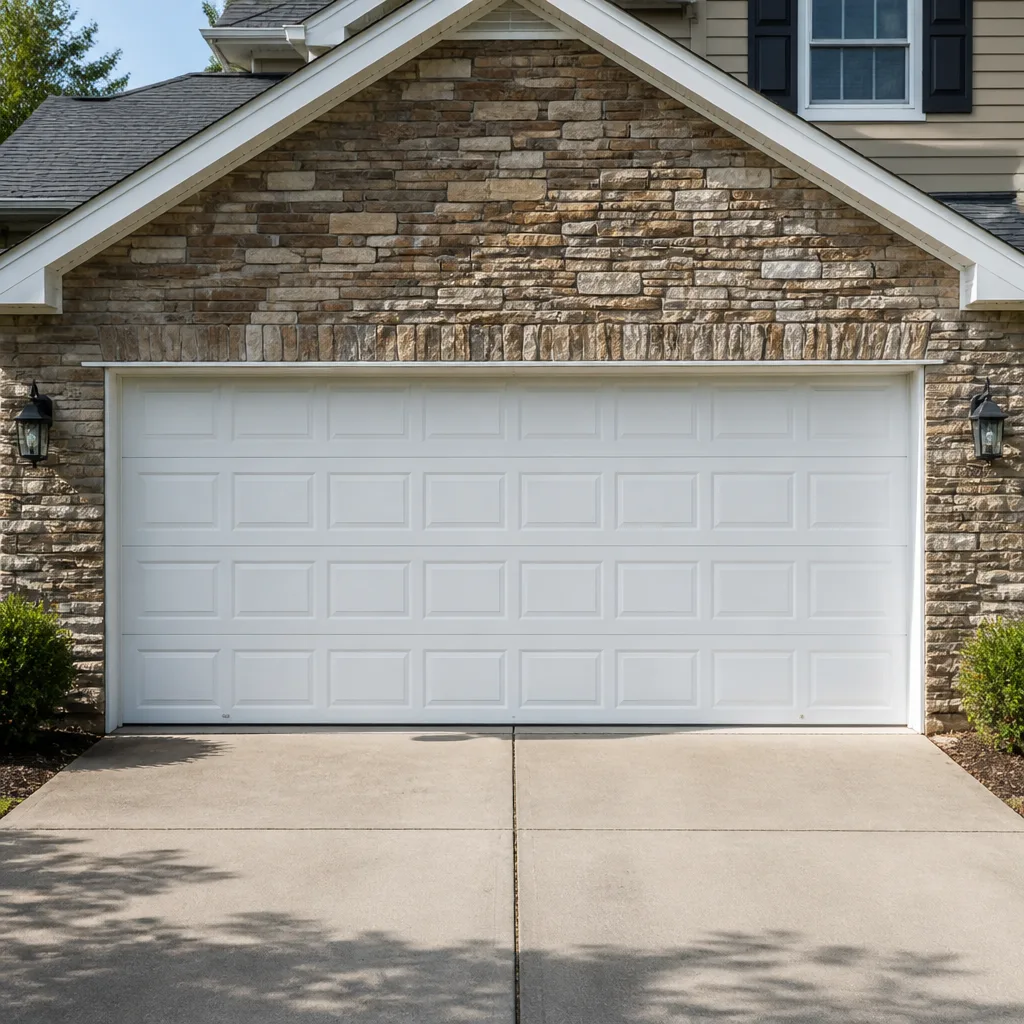 Raised-panel steel
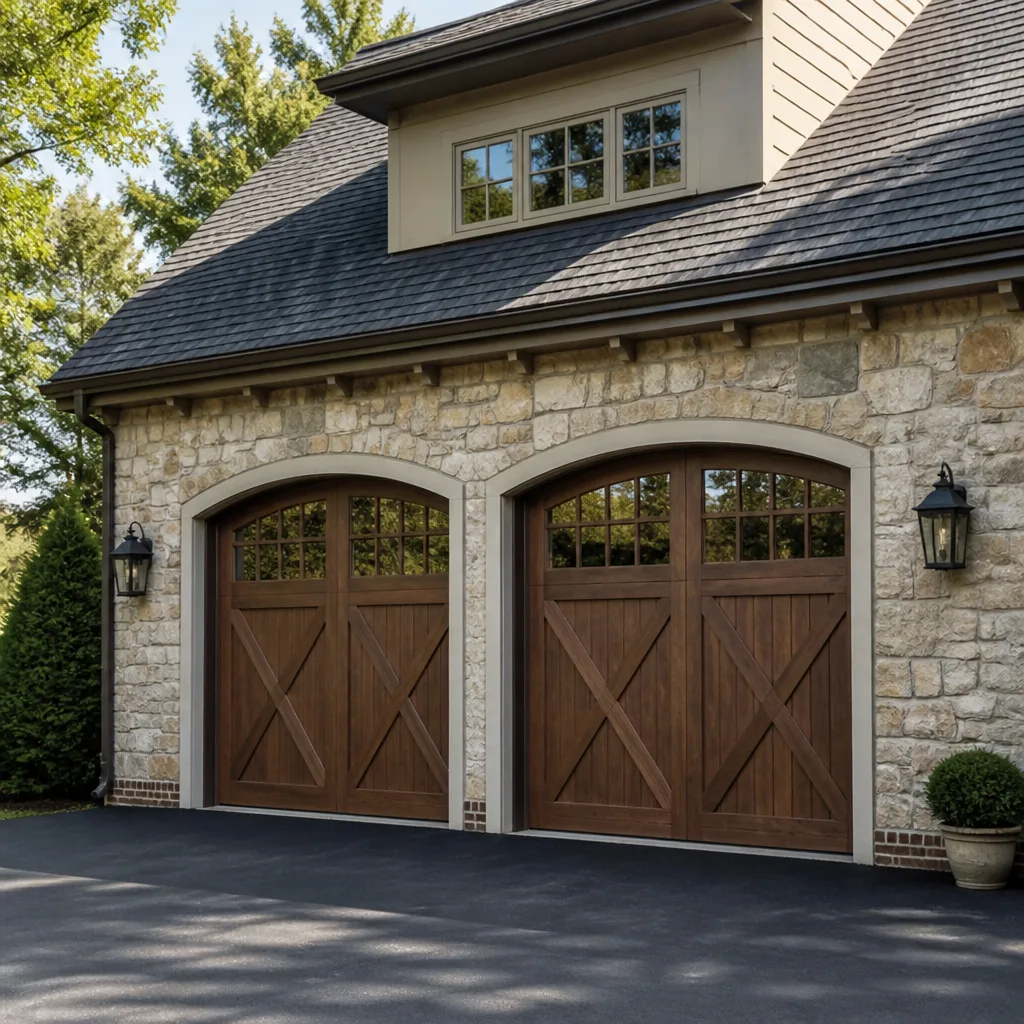 Carriage house
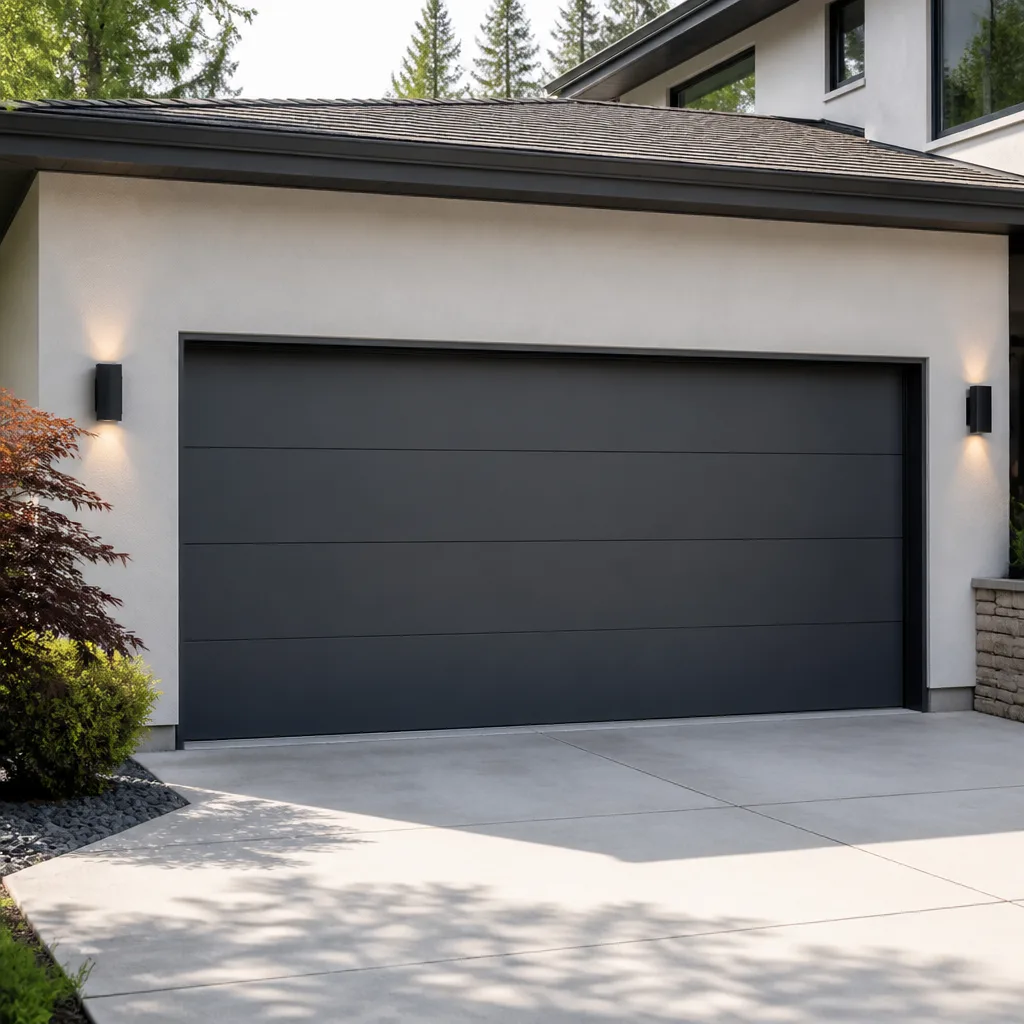 Modern flush
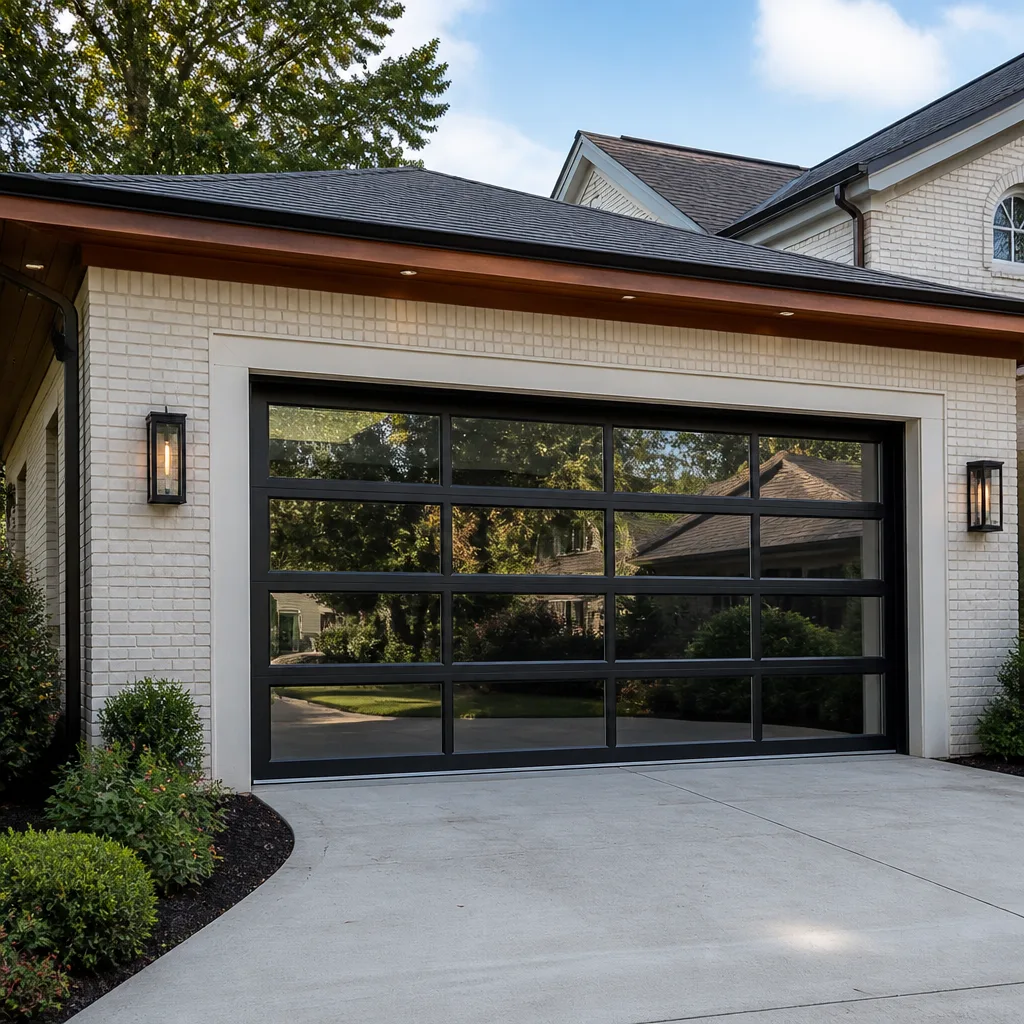 Full-view glass
 LiftMaster openers
 Chamberlain openers
Full 25-point door and opener safety check with every visit - springs, cables, rollers, tracks, and your LiftMaster or Chamberlain opener included
You get a price before we start. It does not change when the pro arrives.
Get your free estimateHow to Hire a Garage Door Contractor in Deerfield Beach: A Step-by-Step Guide
Most homeowners hire a garage door contractor the same way they hire a plumber: something breaks, they call the first name that comes up, and they hope for the best. That approach works fine when the stakes are low. A garage door isn’t low stakes. A torsion spring carries enough stored energy to injure a person badly if it’s handled by someone who doesn’t know what they’re doing, and the person standing in your garage is the one who decides whether that job is done safely. In Deerfield Beach, the added wrinkle is that the market fills up fast with unfamiliar names after a storm passes, and plenty of them aren’t properly licensed. This guide gives you a screening process you can run in a few minutes, before anyone sets foot in your garage.
Quick Answer
To hire a garage door contractor in Deerfield Beach, verify the contractor’s license through Florida’s DBPR lookup, confirm they carry insurance, insist on a written estimate that itemizes parts and labor, and ask brand-specific questions that separate a repair specialist from a salesperson. A legitimate contractor will welcome all four steps. An unlicensed operator will dodge at least one of them.
Styles & brands we work with
- Raised-panel steel
- Carriage house
- Modern flush
- Full-view glass
- LiftMaster openers
- Chamberlain openers
Table of Contents
- Why Hiring Right Matters More in Deerfield Beach
- How to Verify a Florida Garage Door Contractor’s License
- Red Flags Specific to the South Florida Market
- What a Legitimate Written Estimate Must Include
- Repair Specialist or Replacement Salesperson?
- Questions That Reveal Real Brand Knowledge
- Step-by-Step: Before, During, and After the Appointment
- Common Mistakes to Avoid
- When to Call a Professional
Why Hiring Right Matters More in Deerfield Beach
Broward County’s storm season reshapes the garage door market every year. After a named storm moves through, the number of operators advertising garage door work in and around Deerfield Beach climbs within days. Some are legitimate specialists who live and work here year-round. Many are not. They rent a truck, print a magnetic sign, and knock doors in neighborhoods where a few garage doors were damaged.
The problem isn’t that these operators are all criminals. It’s that you have no practical way to check their credentials on the spot, and by the time the work goes wrong, they’ve moved on to another county. The homeowner is left with a door that doesn’t close right, a spring installed below the correct tension, or an opener wired incorrectly, and no recourse.
Deerfield Beach adds a second layer of risk that has nothing to do with weather: the local housing stock. A lot of homes here are older, with original overhead doors and openers that have been repaired a dozen times. Those systems need a technician who can diagnose a specific failure on aging hardware, not a salesperson who sees an old door and hears a replacement sale.
The practical takeaway is simple. Screen the contractor before the appointment, not after. A few minutes of verification up front saves you from being someone’s learning curve.
How to Verify a Florida Garage Door Contractor’s License
Florida’s Department of Business and Professional Regulation (DBPR) maintains a public license database you can search in about three minutes. You don’t need an account and you don’t need to know the license number in advance. You can search by the business name or by the individual’s name.
- Go to the DBPR license lookup. The department’s website has a public search tool for licensed professionals and businesses.
- Search by name. Enter the business name exactly as it appears on the estimate or the truck. Try the individual’s name too if that’s what you were given.
- Check the license status. The record should show an active status, the license type, and the expiration date. If you see “null,” “delinquent,” or no result at all, stop there.
- Confirm the name matches. The name on the license needs to match the name on your estimate and the name of the company doing the work. A mismatch is a real problem, not a paperwork detail.
- Note the expiration date. An expired license is not the same as no license, but it’s close enough for decision-making purposes. Ask the contractor to explain before you move forward.
If the search comes back empty and the person on the phone says they’re “licensed and insured, don’t worry about it,” that’s your answer. There are plenty of vetted, state-licensed professionals in Deerfield Beach. You don’t have to take a stranger’s word for it.
One more step that takes thirty seconds: ask whether they’re insured for garage door work specifically, and ask for the certificate of insurance. A legitimate contractor keeps it easily accessible. When the local pro we connect you with arrives, they’ll be licensed and insured as their state requires, and you can confirm every detail on your own before work starts.
Red Flags Specific to the South Florida Market
Generic warning lists tell you to avoid “pushy salespeople.” That’s not useful. Here’s what actually signals a problem in the Deerfield Beach area:
- Out-of-state plates on the service vehicle. Florida contractors working locally register their vehicles in Florida. Out-of-state tags on a truck advertising garage door work is the single most reliable red flag in a storm market.
- No local address. Ask for it. A legitimate contractor has a business address you can verify. If the answer is “we come to you,” the person on the phone may be a call-taker routing work to whoever is available.
- Cash-only quotes. A cash discount is one thing. A contractor who only takes cash, with no written invoice, is a contractor with no paper trail and no accountability.
- Door-knocking after storms. Legitimate contractors get calls. They don’t need to canvas neighborhoods after a weather event. If someone shows up at your gate unsolicited offering garage door work, that’s a screening problem you don’t have to accept.
- No written estimate before work begins. This isn’t a preference. It’s the difference between a professional job and an open-ended invoice.
- Quotes given over the phone without seeing the door. A real estimate requires looking at the door, the springs, the tracks, and the opener. A number given sight-unseen is a placeholder, and it tends to grow once the truck arrives.
- Pressure to replace when you asked for repair. If you call about a broken spring and get a hard pitch for a new door, you called a sales operation. A repair specialist will tell you what’s actually broken and what it costs to fix.
None of these flags require a confrontation. If you see one, thank the person and end the call. There’s no shortage of contractors in Deerfield Beach; you’re not losing your only option.
What a Legitimate Written Estimate Must Include
A written estimate is the core of a fair transaction. Under Florida contracting law, the agreement should reflect the scope of work in writing before any work begins, and the price you agree to is the price you should pay. That said, the law doesn’t spell out the exact format, so knowing what a good estimate looks like is your job. Here’s what separates a professional written estimate from something a text message won’t cover:
- The contractor’s business name, address, and license number. All three, printed on the document.
- A specific description of the work. “Repair garage door” is not a scope of work. “Replace two torsion springs, both rated for the door’s weight, plus rebalance and test cycle” is.
- Itemized parts and labor. Not a single lump sum. You should be able to see what the spring or opener costs versus what the labor costs.
- Brands and model numbers of parts. If a replacement opener is going in, the model number belongs on the estimate. So does the spring type and size.
- The total price, stated as a fixed amount. The estimate should make clear that the price is what you pay, subject only to changes you approve in advance.
- A timeline. When the work will happen, and roughly how long it will take.
- Any exclusions. If the estimate doesn’t cover something (say, replacing rusted track), it should say so explicitly.
The estimates that lead to disputes are almost always missing the same things: no license number, no itemization, no stated price, and no mention of what happens if additional problems turn up. If you see those gaps on paper, you’ll see the same gaps on the invoice. Ask for a proper estimate before anyone picks up a tool. Estimates are free with the local pro we connect you with, and the price quoted and agreed is what applies.
Repair Specialist or Replacement Salesperson?
You can tell the difference before the technician arrives, and you can confirm it within the first five minutes on site. Here’s how.
Before the appointment
- Listen to the intake call. A repair specialist asks what’s happening. “Does the door go up and then come back down?” “Is the opener running but the door isn’t moving?” “Is the door crooked?” A salesperson asks how old the door is and what kind of style you’re interested in.
- Check their service list. A company that advertises door repair, opener repair, and spring repair is a fix-first operation. A company that mainly advertises new door installation and “free estimates on replacement” is a replacement shop that does repairs on the side.
- Read the language on their site. “Repair or replace” is a policy decision. “Repair first, replace only when repair isn’t safe or practical” is a service model.
At the appointment
- The first move. A specialist heads for the door and starts inspecting. A salesperson pulls out a catalog or a tablet before looking at anything.
- What they recommend first. If the diagnosis starts with a repair option, you’re in good hands. If the first recommendation is a full replacement for a door that’s repairable, ask why.
- How they answer a “no.” Decline the upsell and see how the conversation goes. A professional will fix what you asked them to fix.
Here in Deerfield Beach, this distinction matters more than in most places because so many homes have doors that are old but perfectly serviceable. A well-made Clopay or Amarr door that needs a spring or a set of rollers is not a door that needs to be thrown away. Find a contractor who’ll tell you the same thing.
Questions That Reveal Real Brand Knowledge
Garage door brands are not interchangeable. LiftMaster and Chamberlain openers share some architecture but have different logic boards and travel modules. Genie openers use a different rail system and different remote frequencies. Craftsman openers are largely built on Chamberlain hardware but labeled and serviced differently. Clopay and Amarr doors have different hinge profiles and roller gauges. Wayne Dalton doors use proprietary torsion systems on some models. Raynor doors have their own panel and track designs. A technician who knows the difference will tell you things you can’t get from a manual.
Here are questions that separate a brand-aware technician from someone who is guessing:
- “What opener do I have, and what’s the most common failure point on it?” A LiftMaster owner should hear something different than a Genie owner. If the answer is the same for both brands, the technician is winging it.
- “Do you carry the parts for my door, or do you need to order?” Spring repair almost always uses universal springs sized to the door. Other repairs may need brand-specific parts. A straight answer either way is fine; a vague one is not.
- “Does my opener support smart-home connectivity, and if so, how do you troubleshoot it?” Modern LiftMaster and Chamberlain openers use app-connected systems. Genie offers a similar feature. If the contractor doesn’t know what you’re referring to, they’re not your opener tech.
- “What’s the difference between a torsion spring and an extension spring, and why does it matter for my door?” If the answer can’t be given in plain language, they don’t work on springs often enough to be worth hiring for one.
- “What brand is my door, and how can you tell?” A trained eye can often identify a door brand from the panel profile, hinge style, and track hardware. It’s a good test of whether they’ve handled enough Deerfield Beach doors to recognize the local inventory.
We work on the brand you already have. That’s the whole reason we’ve trained our technicians on eight major residential brands: LiftMaster, Chamberlain, Genie, Clopay, Amarr, Wayne Dalton, Craftsman, and Raynor. Asking these questions isn’t a trick. It’s how you confirm the person in your garage actually knows your system.
Step-by-Step: Before, During, and After the Appointment
Here’s a sequence you can follow from the first phone call to the final test cycle.
Before the appointment
- Verify the license on DBPR. Name and status, both confirmed.
- Ask for a certificate of insurance. General liability at minimum.
- Get a written estimate in advance. If the contractor won’t provide one before the visit, that’s a stop sign.
- Confirm the service address on paper. It should match the address on your home and the address on the license search.
- Note the brands in your garage. Door brand, opener brand, model number if you have it. This is what you’ll use to test the technician’s knowledge.
During the appointment
- Have the technician inspect before quoting. Any quote given before the door is touched is a guess.
- Confirm the price before work starts. If the initial diagnosis changes, ask for an updated price. The estimate is the price unless you approve a change.
- Watch the safety steps. For spring work, a trained technician takes specific precautions: securing the door, using the right winding bars, and never working under tension without the door locked down. If any of that gets skipped, that’s your cue to stop the job.
- Ask for the parts removed. You should get the old springs, opener components, or anything else taken off the door.
After the appointment
- Run the door through several cycles. It should open and close smoothly and stop cleanly at the bottom. Any hesitation, grinding, or misalignment should be reported immediately.
- Test the safety reverse. Place a small object in the door’s path and confirm the door reverses on contact.
- Check the invoice against the estimate. The amount should match the price you agreed to. If it doesn’t, ask why before paying.
- Keep the estimate, the invoice, and the warranty in one place. If the same part fails again, you’ll want the paperwork.
Any of the local pros we connect you with can walk you through the same sequence on the phone before you book, so there are no surprises when the appointment starts. If the work is a repair, you can expect us to match you with someone who can often come the same day. Estimates are free, and the price is agreed before any work starts.
Common Mistakes to Avoid
- Hiring based on a driveway sign. A magnetic sign tells you nothing about licensing, insurance, or skill. Verify the license and get a written estimate before you let anyone start.
- Skipping the DBPR lookup because it’s “just a garage door.” It’s a high-tension mechanical system. The license check is the single fastest screening step you have, and it takes three minutes.
- Accepting a phone quote as a final price. Any contractor who quotes a garage door repair without looking at the door is guessing. The price you agree to in writing after inspection is the real number.
- Calling a general handyman for a spring repair. A handyman may be perfectly good at many jobs. Spring work isn’t one of them. Torsion springs demand the correct tools, the correct replacement, and a trained technician who understands the tension involved.
- Paying in full before the door has been tested. Paying a deposit for ordered parts is normal. Paying the full invoice before the door cycles correctly is not.
- Ignoring the signs after a Broward County storm. If the operator has out-of-state plates, no local address, or no verifiable license, don’t be their customer. The legitimate Deerfield Beach contractors are easy to find and they welcome the check.
- Letting a repair become a replacement because of pressure. If your door is functional and the problem is a broken spring or a failing opener, that’s a repair, not a replacement. Walk away from any quote that doesn’t start there.
When to Call a Professional
Some garage door problems are annoying but safe to live with for a few days: a noisy roller, a stubborn remote, a door that’s a little stiff. Others aren’t. Call a professional immediately if you’ve heard a loud snap from the garage and the door now hangs crooked or won’t open at all (that’s a broken spring); if the door closes on its own or drops fast; if a cable is visibly loose or frayed; if the opener runs but the door doesn’t move; or if the door has come off the tracks entirely. Spring and cable failures are genuine safety issues, not a minor inconvenience, and they should never be handled by a homeowner or a general handyman. Deerfield Beach Garage Door Repair Pros offers free estimates in Deerfield Beach – call (855) 210-1282. Our technicians have up to 12 years of experience, and the local pro will quote the price in writing before any work starts.
See the difference
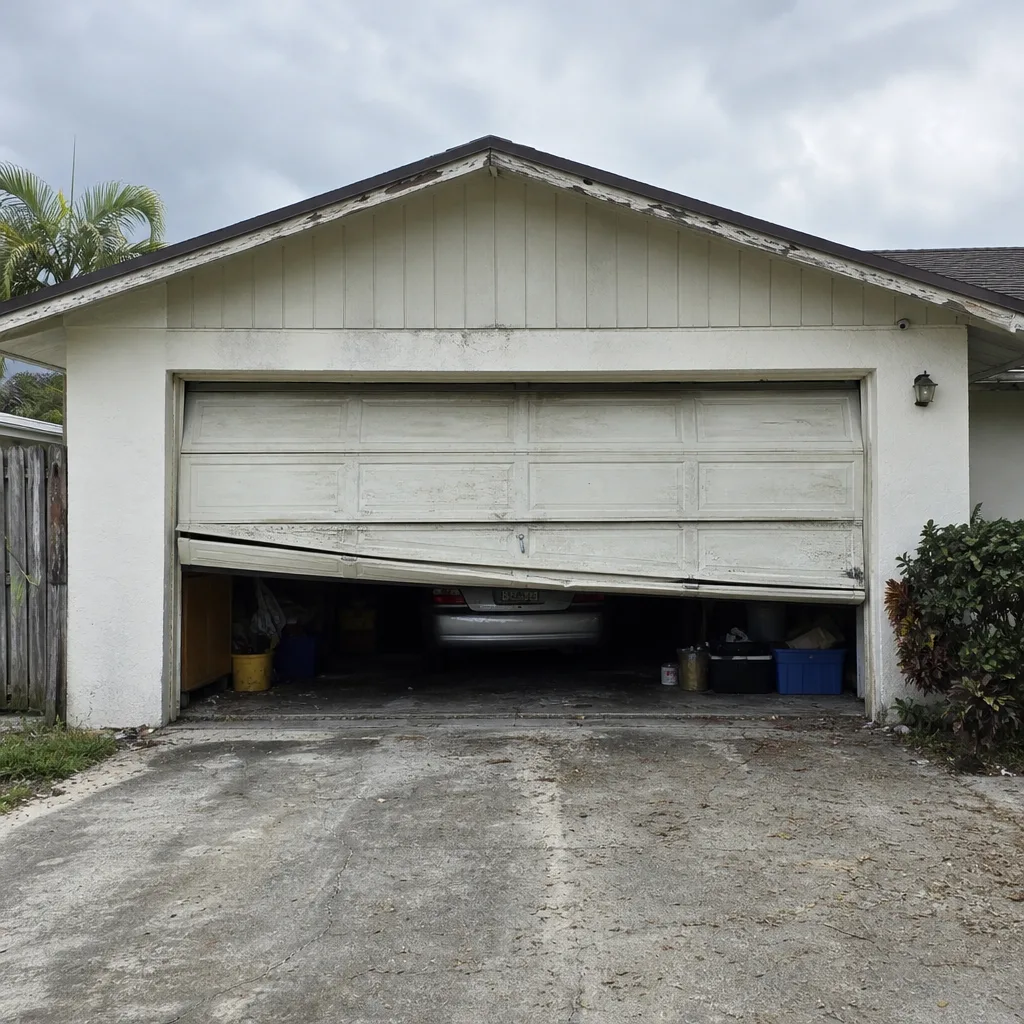 Before
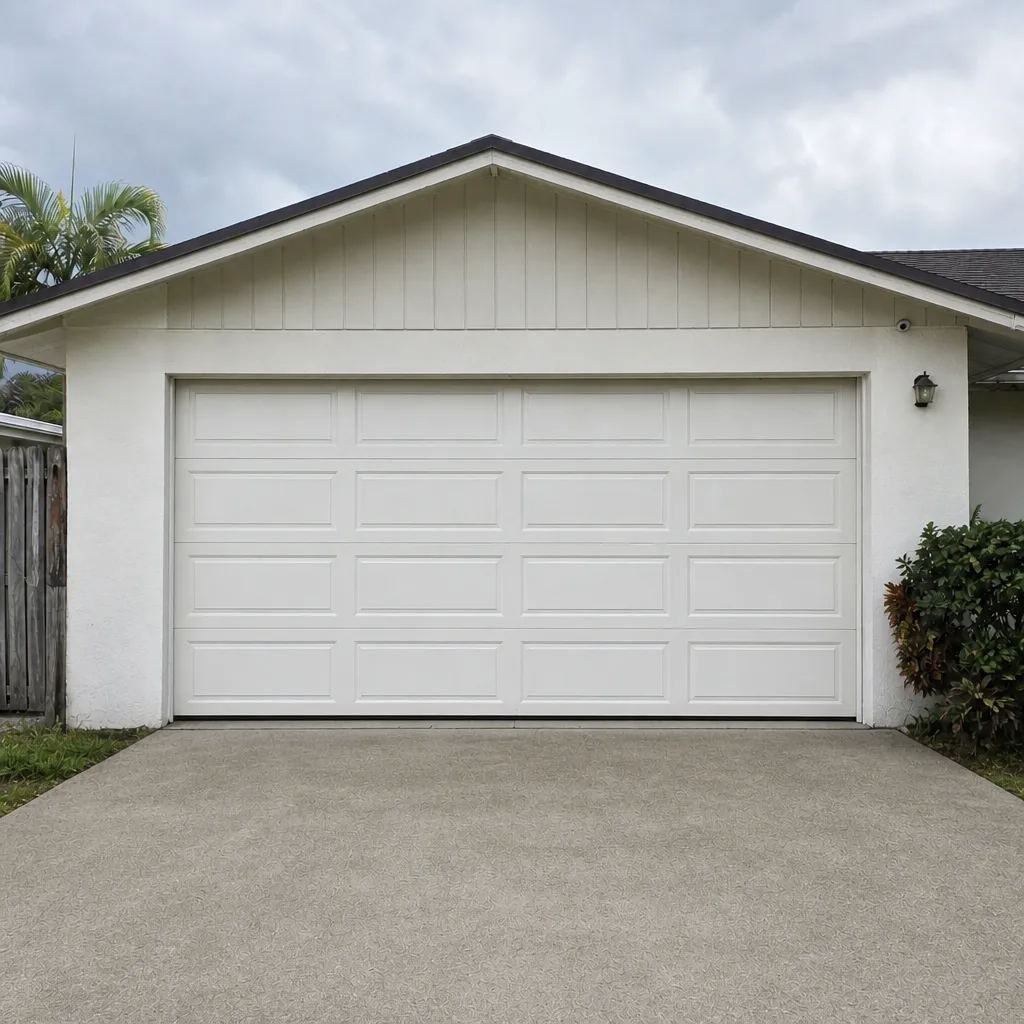 After
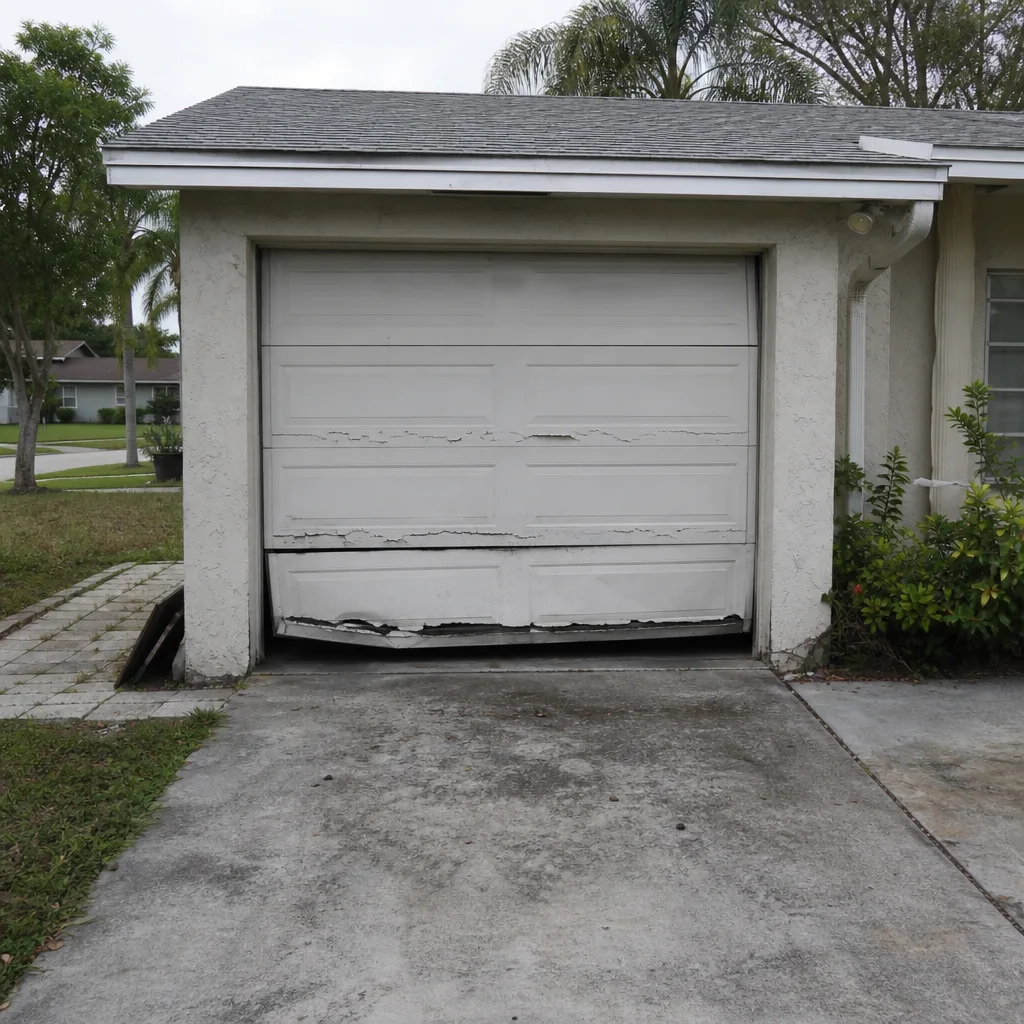 Before
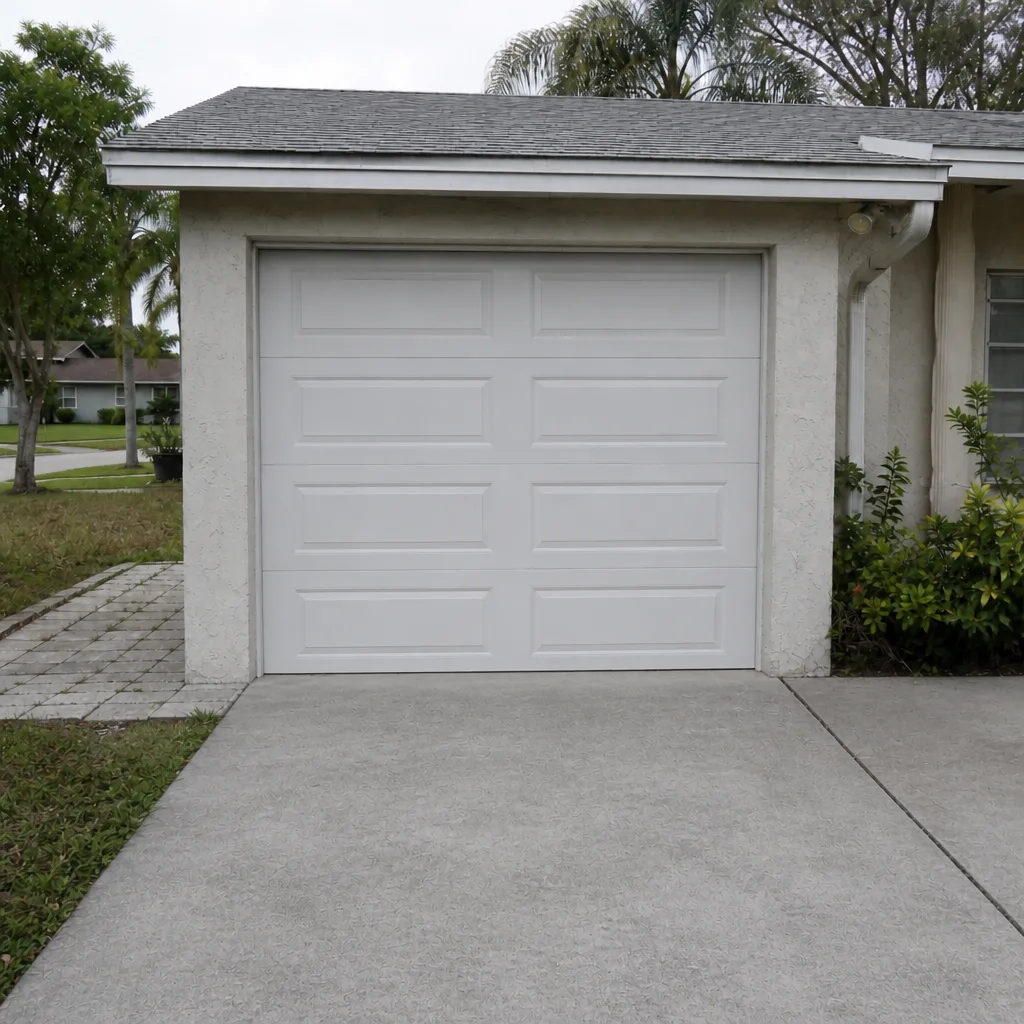 After
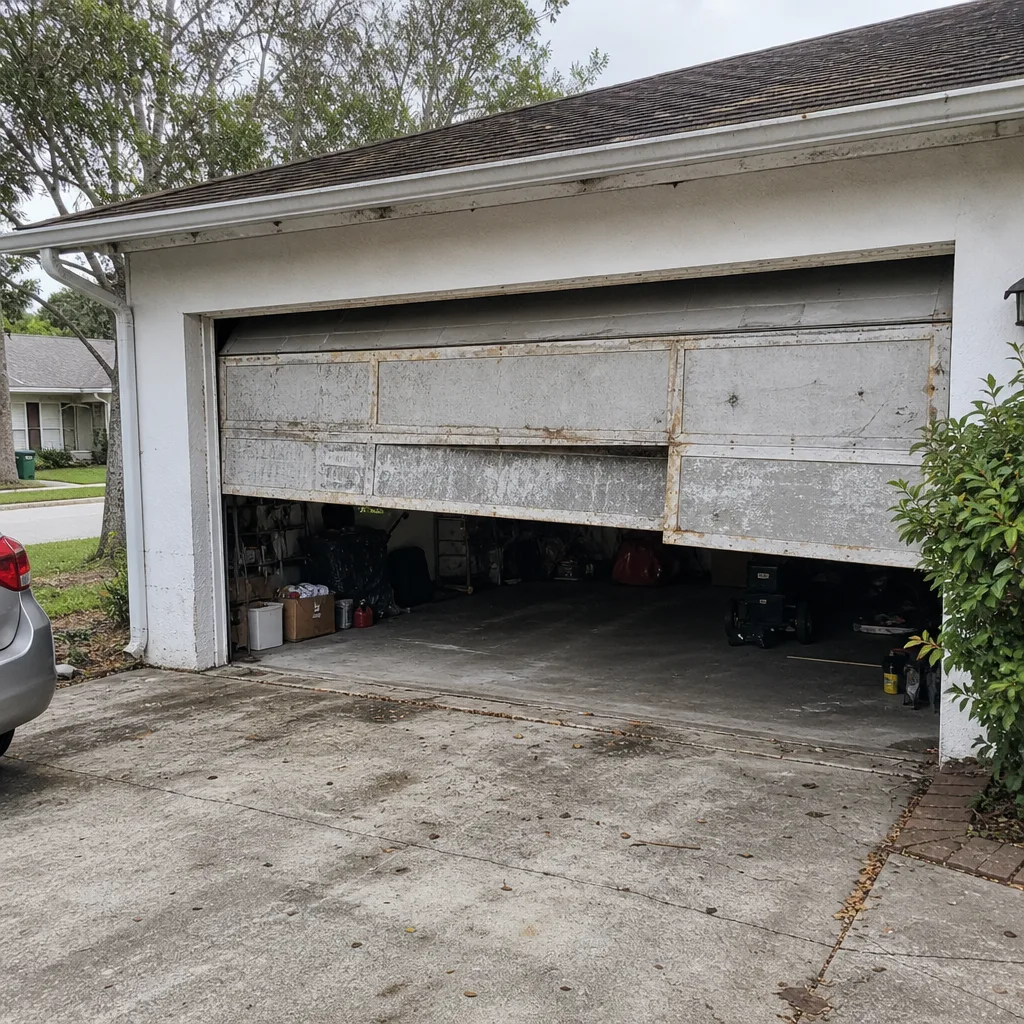 Before
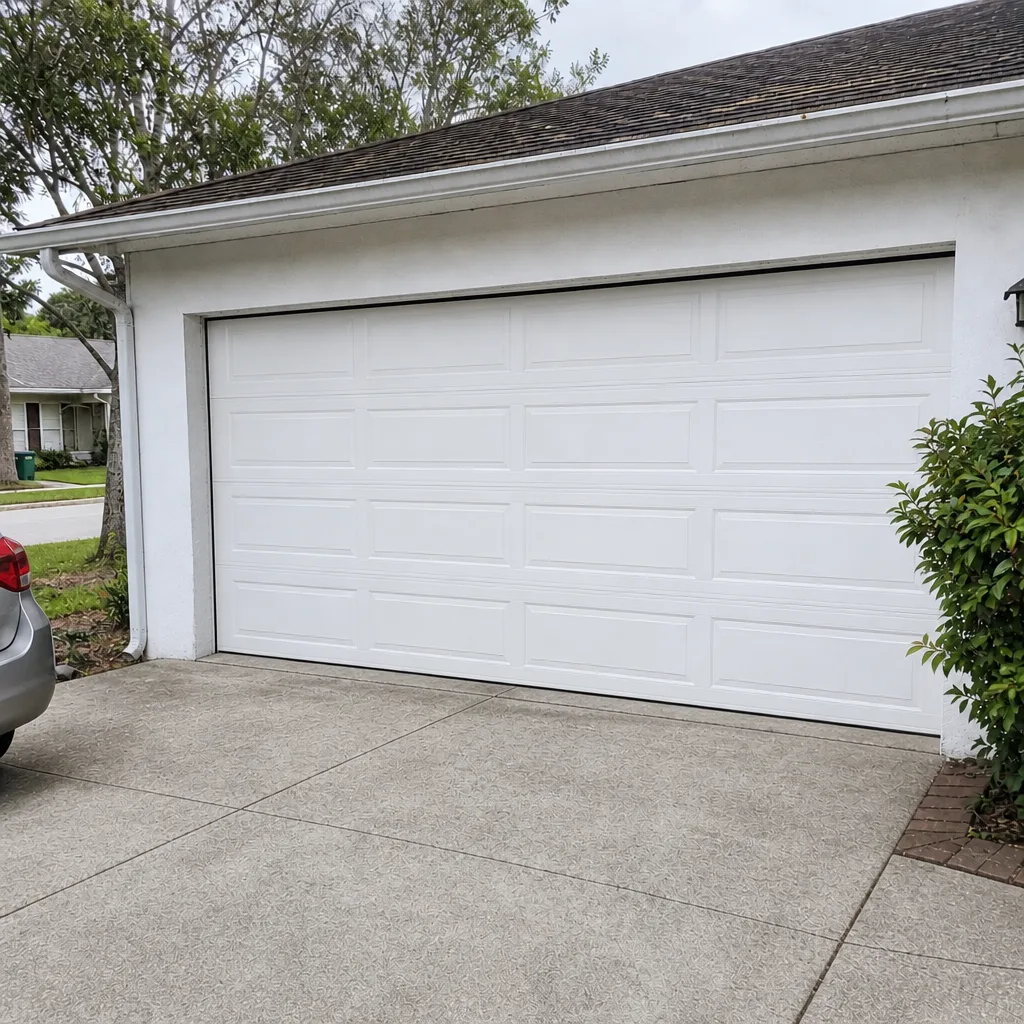 After
Frequently Asked Questions
Spring repair in the Deerfield Beach area typically costs in the low-to-mid hundreds of dollars for a single spring. A matched pair is usually replaced together because the springs wear at the same rate, so expect roughly double. The written estimate you get after a technician looks at the door is the price that applies, and it’s agreed before any work begins. Call (855) 210-1282 for an exact quote – estimates are free.
Yes. Florida’s DBPR license lookup is a public tool you can search by business or individual name in about three minutes. The record should show an active license, the license type, and the expiration date. If a search returns no result, or the name on the license doesn’t match the name on your estimate, don’t hire that contractor. Call (855) 210-1282 if you want to know what to look for on the record.
Not on a legitimate job. The estimate given after inspection is the price you agree to, and it doesn’t change unless you approve a change in writing. The only legitimate reason for a price change is a new problem the technician couldn’t see before arrival, and that gets discussed with you before work continues. Call (855) 210-1282 for a free estimate on your door.
The local pro we connect you with is licensed and insured as their state requires. We work with vetted independent local professionals, and you can verify their credentials through DBPR before anyone arrives at your home. Call (855) 210-1282 and we’ll help you book a visit.
Most garage door problems are repair problems, not replacement problems. Broken springs, failing openers, worn rollers, bent tracks, and damaged panels can almost always be fixed on the existing door. Replacement makes sense when the door structure itself is failing, when the cost of repairs approaches the cost of a new door, or when the current door creates a genuine safety problem. A repair-first specialist will tell you which scenario you’re in. Call (855) 210-1282 for an honest assessment.
No. Torsion and extension springs are under extreme tension, and a spring that releases unexpectedly can cause serious injury. Even experienced DIY homeowners should not attempt spring replacement. The correct fix requires the right winding bars, correct spring sizing for the door’s weight, and a trained technician. We handle garage door spring repair as a dedicated specialty because it deserves one. Call (855) 210-1282 to book a repair visit.
The Bottom Line
Hiring a garage door contractor in Deerfield Beach comes down to four checks you can run before anyone arrives: verify the license on DBPR, confirm insurance, insist on a written estimate with itemized parts and labor, and ask brand-specific questions that reveal whether the technician actually knows your system. The market here fills up with unfamiliar operators after storms, but the legitimate contractors are easy to find once you know what to look for. A repair-first specialist will tell you what’s broken and what it costs to fix. A salesperson will tell you what you should buy. Know the difference before they knock on your door.
If you’d like a trained specialist who’s handled every major residential brand to take a look at your door, call (855) 210-1282 for a free estimate. We can help you with garage door repair, garage door opener repair, and the spring work that matters most for safety. Our technicians have up to 12 years of experience, and the local pro will quote and agree on the price in writing before any work starts. For our full range of services, visit Deerfield Beach Garage Door Repair Pros.
Written by the team at Deerfield Beach Garage Door Repair Pros.