Last updated November 20, 2026
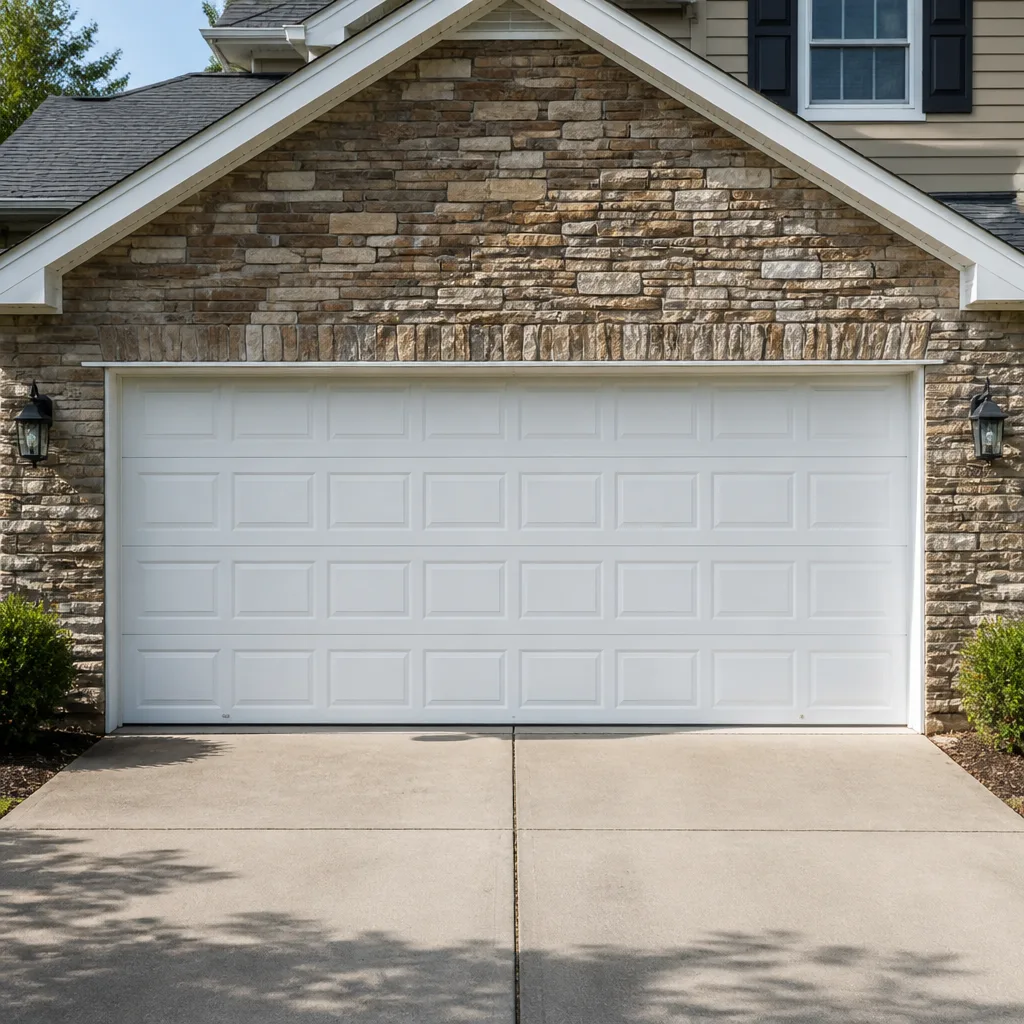 Raised-panel steel
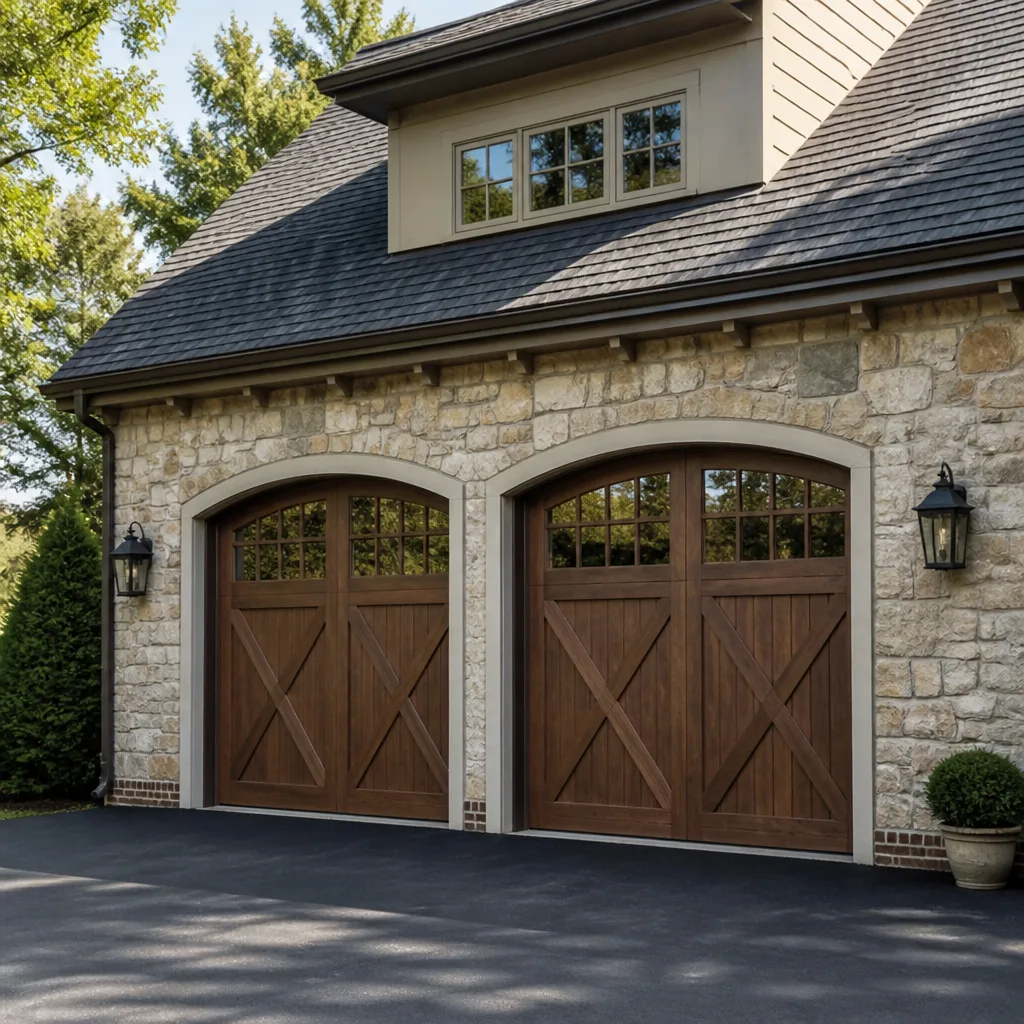 Carriage house
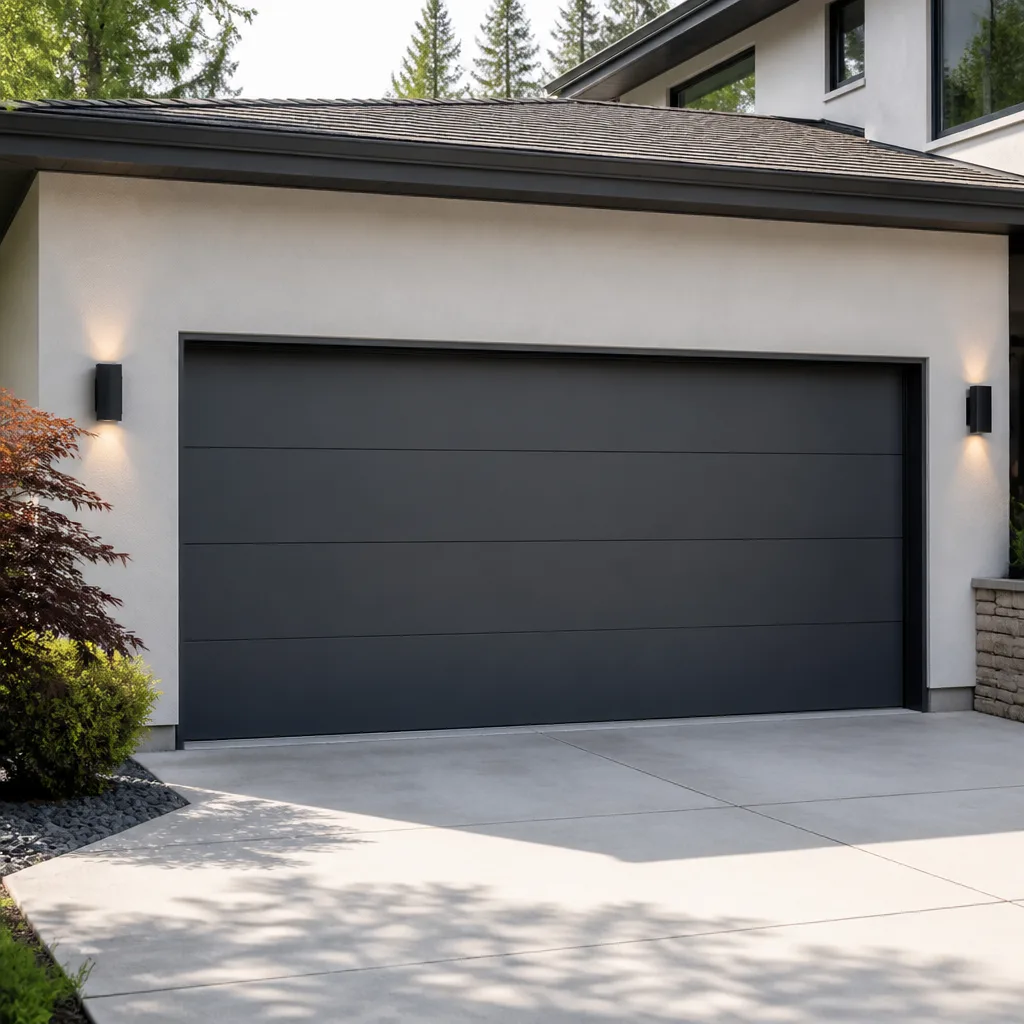 Modern flush
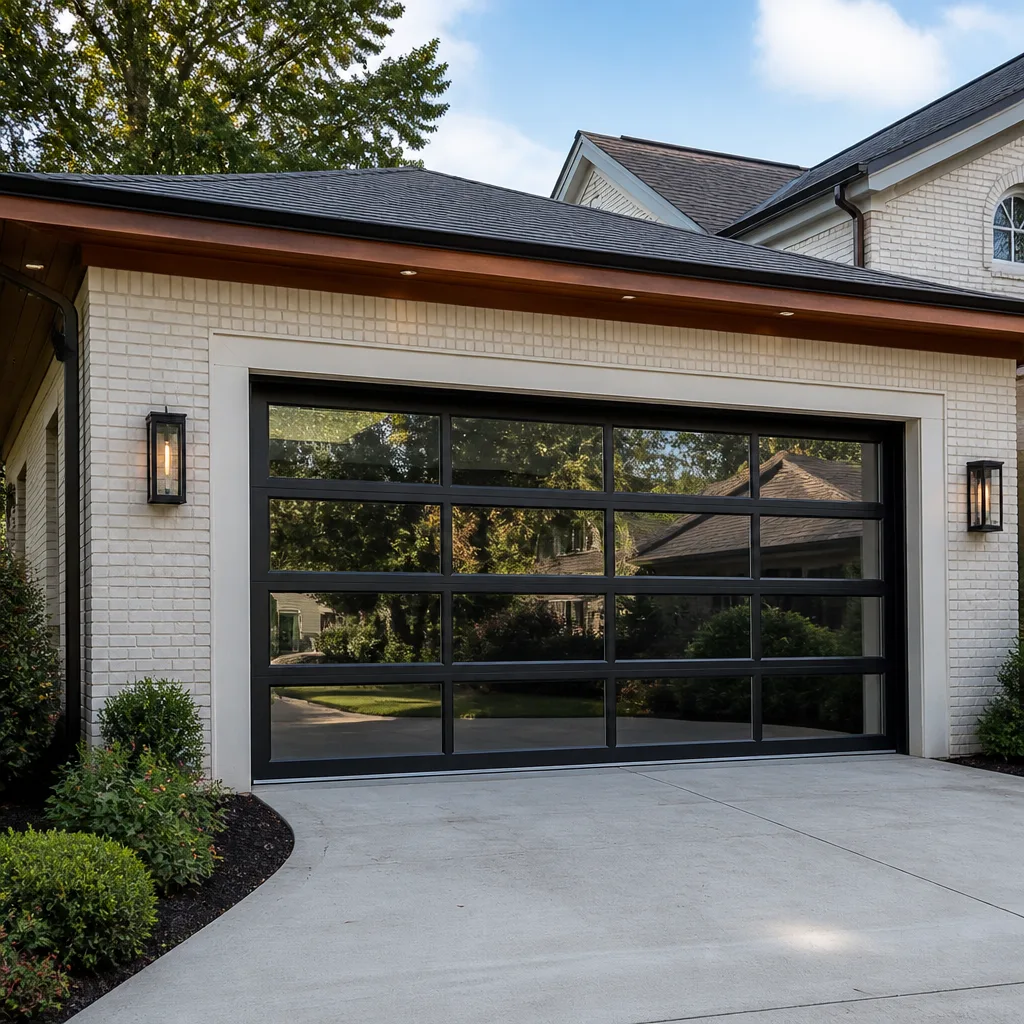 Full-view glass
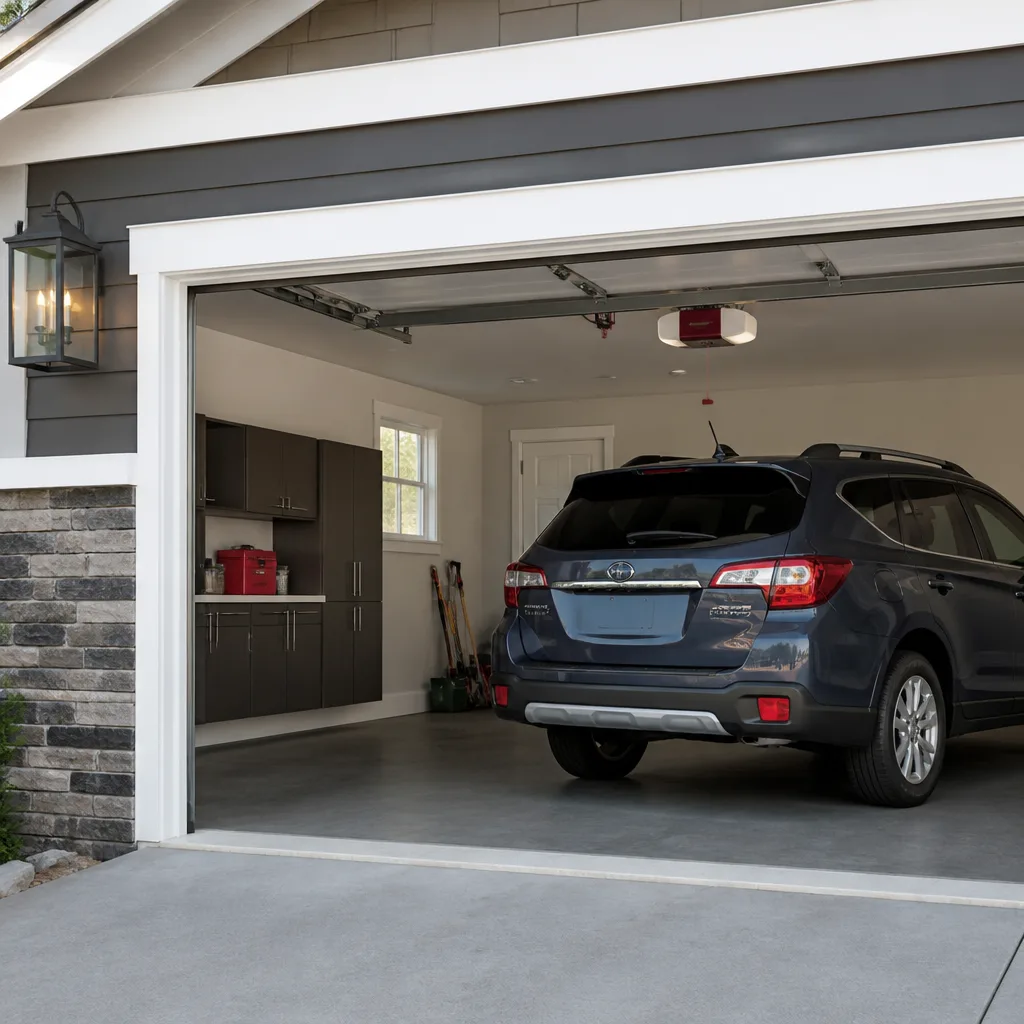 LiftMaster openers
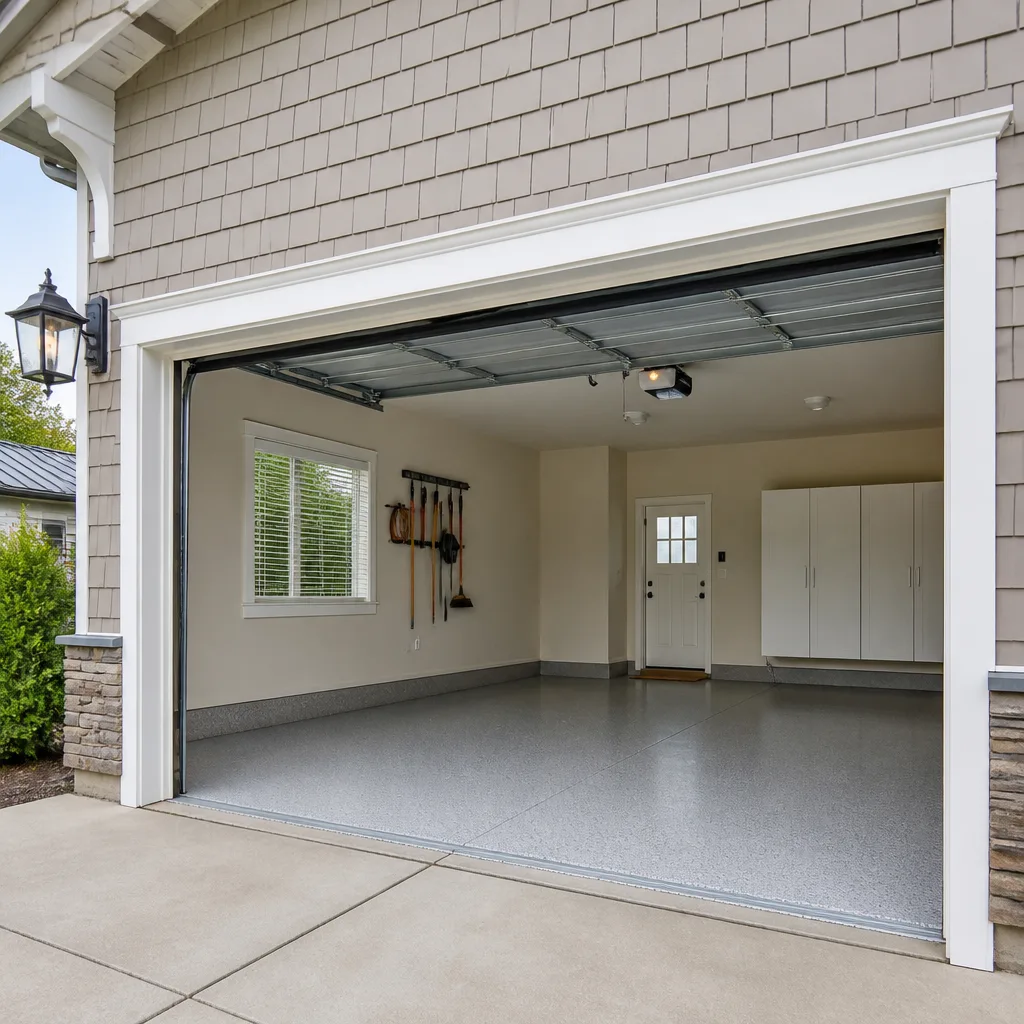 Chamberlain openers
Full 25-point door and opener safety check with every visit - springs, cables, rollers, tracks, and your LiftMaster or Chamberlain opener included
You get a price before we start. It does not change when the pro arrives.
Get your free estimateSeasonal Garage Door Care for Deerfield Beach: Year-Round Homeowner’s Guide
Most garage door advice is written for a climate with four real seasons, which is not the one we have here. In Deerfield Beach, the calendar that matters to your door has three cycles, not four: hurricane prep season from late spring through fall, the rainy season that stresses seals and hardware, and the dry months that shrink wood-composite panels and stiffen weatherstripping. Skipping the prep cycle isn’t just a property risk. An improperly braced door is one of the leading pathways for wind to pressurize a home’s structure during a storm. This guide walks through what to check, when to check it, and when a task belongs in the hands of a specialist rather than on your weekend list. We’ll cover Deerfield Beach conditions specifically, from the Intracoastal side of town to the neighborhoods further west.
Quick Answer
Garage door care in Deerfield Beach follows three seasonal cycles rather than four: pre-hurricane bracing and hardware checks before storm season, seal and drainage attention during the rainy months, and lubrication and weatherstripping care in the dry season. Springs, cables, and door balance should be inspected by a trained technician at least once a year, because those are the components that fail without warning. Everything else on this list, you can handle yourself in an afternoon.
Styles & brands we work with
- Raised-panel steel
- Carriage house
- Modern flush
- Full-view glass
- LiftMaster openers
- Chamberlain openers
Table of Contents
- Why Deerfield Beach Seasons Don’t Match Standard Garage Door Advice
- Pre-Hurricane Season Checklist for Deerfield Beach Homeowners
- Rainy Season: Seals, Drainage, and Hardware That Sits in Water
- Dry Season and the Mild “Winter”: Wood Composite and Weatherstripping
- Post-Storm Inspection Protocol After a Named Storm or Major Rain
- How the Intracoastal Affects Corrosion East of US-1 Versus Further West
- What Brand You Own Changes Your Maintenance Checklist
- A Year-Round Maintenance Schedule You Can Actually Keep
Why Deerfield Beach Seasons Don’t Match Standard Garage Door Advice
If you read a national garage door maintenance guide, it will tell you to winterize. That advice assumes a hard freeze and months of dry indoor heat. Neither applies here. What Deerfield Beach homeowners actually deal with is sustained heat, high humidity for much of the year, and a hurricane season that runs from the start of summer into late fall. The garage is often the hottest and most humid room in the house, and the door is the biggest moving assembly on the property.
That combination puts wear on different parts than you might expect. Heat softens rubber seals. Humidity works on steel hardware. Sun exposure on a west-facing door fades the finish and dries out the weatherstripping. And the storm cycle adds one more layer: wind pressure that an unbraced door was never designed to resist.
In our experience working throughout Deerfield Beach, three things fail more often than anything else on a door that gets no seasonal attention:
- Bottom seals that have gone hard and stopped sealing, letting rain and insects in.
- Hinges and rollers that have gone dry and started grinding because the factory lubricant washed away in the humidity.
- Torsion and extension springs that were already near the end of their cycle life and finally let go.
None of those failures announce themselves weeks in advance. A door that runs quietly in February can snap a spring in July with no warning at all. Seasonal care is how you catch the condition before the failure.
Pre-Hurricane Season Checklist for Deerfield Beach Homeowners
Hurricane season runs from June through November, which means the right time to prepare is late spring, before the first storm forms. The garage door is the largest opening in most homes, and an improperly braced or poorly maintained door is one of the ways wind pressure gets inside and lifts the structure. This checklist is what we walk homeowners through each spring.
1. Check the door’s structural bracing
Older doors often came with flimsy or no internal stiffening. County building departments can tell you what the current code requires for wind-rated doors in your area, and if your home was built before those standards changed, it’s worth asking. Bracing or reinforcing a door that isn’t wind-rated is a job for a technician, not a hardware-store kit.
2. Inspect hinges, rollers, and tracks
Look for loose hinges, cracked rollers, or tracks that have shifted out of plumb. A door that shakes or wobbles when it opens is telling you the hardware has loosened. Tightening and realigning at the start of storm season prevents a mid-storm jam.
3. Test the bottom seal and side weatherstripping
Run your hand along the bottom seal. If it’s brittle, cracked, or has gaps, it won’t keep wind-driven rain out. Same for the vertical seals on the sides. In Deerfield Beach, the combination of heat and afternoon sun wrecks these seals faster than in cooler parts of the country.
4. Confirm the opener’s safety reverse works
Place a piece of wood under the door’s path and trigger the close. The door should reverse on contact. If it doesn’t, the opener is a hazard before a storm ever arrives.
5. Decide whether your door is wind-rated
If a wind-rated upgrade is on your list, start that conversation in the dry months, not the week a storm is forecast. Understand your options now, before the pressure of a watched cone makes the decision for you.
Rainy Season: Seals, Drainage, and Hardware That Sits in Water
Deerfield Beach gets a lot of rain in concentrated bursts through the summer, and the garage door takes the worst of it. Water runs down the door face, pools at the threshold, and works its way into every hinge and roller bearing. This is the season where the rainy-day hardware problems show up.
Drainage first
Walk outside and look at how water moves around the garage. If the driveway slopes back toward the door, or the ground at the threshold is higher than the threshold itself, water pools against the seal every time it rains. In many Deerfield Beach homes, this is a simple grade correction or a shallow drainage channel, not a door problem. Fix it once and your seal and threshold last years longer.
Bottom seal condition
The bottom seal should sit flush against the floor with no daylight visible from inside. If you can see light under the door after it closes, the seal is worn, the floor has settled, or the door needs adjustment. A worn seal is cheap to replace and prevents most of the water intrusion issues we see.
Rust prevention on exposed hardware
Hinges, rollers, and the door’s steel channels are where standing water does its damage. A light lubrication pass with a garage-door-specific lubricant (not WD-40, which attracts dirt) once a month during the rainy season keeps moving parts protected. Wipe away any visible water on the tracks after a heavy storm.
Opener electrical checks
Rainy season is also when we get calls about openers that trip a breaker or act unpredictably. Water intrusion around the opener housing, a loose wall-plate connection, or a compromised safety sensor are the usual culprits. Don’t ignore erratic behavior; this is exactly the kind of issue our garage door opener repair work covers, and diagnosing it early prevents a stuck door on a stormy afternoon.
Dry Season and the Mild “Winter”: Wood Composite and Weatherstripping
Our dry months are mild compared to most of the country, but they still dry out your garage door. This is the season when wood-composite doors show their first trouble signs, and weatherstripping that felt flexible in the humidity turns stiff and brittle.
Wood composite doors
Composite doors, which you’ll find from brands like Clopay and Amarr, are popular for their look, but they need seasonal attention in a dry spell. Look for hairline cracks along the panel edges, paint that’s starting to flake at the joints, and any visible separation at the stile and rail seams. Seal any exposed wood-composite edges with exterior-grade paint or stain, and check the bottom of the door, where water tends to sit. If you catch a small crack in the dry season, you can address it before the rainy season forces water into it.
Weatherstripping flexibility
The vertical weatherstripping on the sides of the door should flex when you push it and snap back. Dry-season high temperatures combined with the lower humidity can harden it. If a section is stiff or cracked, replace it. It’s a straightforward job that runs a short length of strip on each side and can usually be handled by a technician during a routine garage door repair visit.
Lubrication schedule
Even in the dry season, the door’s moving parts need one monthly lubrication pass. White lithium grease on the tracks and a garage-door lubricant on the hinges and rollers is enough. Never grease the opener’s rail or the door’s weatherstripping.
Post-Storm Inspection Protocol After a Named Storm or Major Rain
After a named storm passes through Broward County, the first instinct is to open the door and get back to normal. Resist that instinct for a few minutes and inspect first. A door that took a hit during the storm can be quietly misaligned, and running the opener on a damaged door turns a small repair into a big one.
Follow this order:
- Look at the door from the outside. Are the panels still aligned? Any visible bends, dents, or sections that shifted? Check the tracks at the sides for anything that’s out of line.
- Check the bottom seal and thresholds. If water pooled at the threshold during the storm, look for signs of softness or damage at the bottom of the door or the frame.
- Test the balance by hand before using the opener. Disengage the opener (pull the red release lever) and lift the door about halfway. It should hold steady. If it drops or feels too heavy, a spring or cable has been compromised and the door should not be run.
- Lubricate exposed hardware. After the post-storm cleanup, do one lubrication pass on hinges, rollers, and tracks that got wet.
- Test the opener, remote, and safety sensors. Trigger the door from both the wall panel and the remote. If the door hesitates, reverses for no reason, or the sensors show a fault, get it checked before using it again.
If a spring is broken or the door feels out of balance, don’t operate it. Springs and cables are high-tension components and handling them without training is genuinely dangerous. A trained technician with the right tools and protocols is the safe choice. Our garage door spring repair work starts with a full safety inspection for exactly this reason.
How the Intracoastal Affects Corrosion East of US-1 Versus Further West
Homes on the east side of US-1 sit closer to the Intracoastal, and the air there is measurably more humid and carries more airborne moisture. For a garage door, that shows up as faster corrosion on steel hardware and quicker degradation of rubber seals. Homes further west, around the neighborhoods near Quiet Waters Park and the western residential blocks, tend to see slower hardware wear on the same schedule.
That difference doesn’t change what you do each season; it changes how often. East of US-1, we recommend:
- Lubricating hinges and rollers twice a month during the rainy season, not once.
- Inspecting the bottom seal for hardening every two to three months rather than annually.
- Watching for white corrosion or pitting on the door’s steel frame and hardware, and addressing it with a corrosion-inhibiting lubricant as soon as it appears.
Homes west of US-1 can usually follow the standard schedule without issue. If you’re not sure which side of the line you’re on, look at a map or your property tax record; the difference is worth knowing because it sets your inspection frequency.
What Brand You Own Changes Your Maintenance Checklist
Every door and opener system has its own quirks, and knowing what you own saves time and prevents wrong parts from being installed on the wrong system. We work on eight of the most common residential brands: LiftMaster, Chamberlain, Genie, Clopay, Amarr, Wayne Dalton, Craftsman, and Raynor. Technicians who work on the brand you already have arrive already familiar with the specific hardware in your garage.
Opener brands
LiftMaster and Chamberlain (which are part of the same family of systems) and Genie and Craftsman openers all have different remote frequencies, safety sensor designs, and logic boards. Some of the modern ones, like Genie Aladdin Connect, LiftMaster MyQ, and Chamberlain’s app-connected systems, add connectivity troubleshooting to the mechanical list. If your app stops connecting or the door stops obeying the remote, the diagnostic path is brand-specific.
Door brands
Clopay, Amarr, Wayne Dalton, and Raynor doors each have their own panel construction, spring configurations, and hardware mounting. A sectional door from one brand doesn’t take parts from another. If you’ve got a Wayne Dalton door with a torsion system, or an Amarr door with extension springs, the seasonal care is similar but the part numbers aren’t. Knowing your brand helps avoid long waits for a fit that doesn’t fit.
Check the sticker inside the door’s top panel, or the label on the opener’s back housing, and write it down. That small piece of information makes every service call faster.
Our Deerfield Beach Garage Door Repair Pros team focuses entirely on garage door work, which means the parts, tools, and training stay specific to this trade.
A Year-Round Maintenance Schedule You Can Actually Keep
A seasonal schedule only works if it fits a normal life. Here’s what a realistic calendar looks like for a Deerfield Beach homeowner.
- Spring (before June 1): Full pre-hurricane checklist, including bracing check, hardware integrity, seal condition, and opener safety reverse test.
- Summer (rainy season, June through September): Monthly lubrication of hinges, rollers, and tracks. Post-storm inspection after any significant weather event. Watch for water intrusion at the threshold.
- Fall (storm season remainder): Another full safety check, especially if a storm has passed through. Confirm the door’s balance is still correct.
- Winter (dry months): Inspect wood-composite panels and weatherstripping for drying cracks and stiffness. Replace brittle seals now, before the next rainy season.
- Once a year: Professional inspection of springs, cables, and door balance. This is the check that catches problems the homeowner can’t see.
If your door is on the east side of US-1, increase the rainy-season lubrication to twice a month and check seals every two to three months. If it’s an older door, add a spring inspection to every seasonal check rather than waiting for the annual.
Common Mistakes to Avoid
- Treating the storm season as one week of prep. Bracing, seal condition, and hardware integrity should be checked before the season starts, not the week a storm is named. Waiting means you’re repairing during a supply crunch.
- Skipping the post-storm check because the door still opens. A door that runs after a storm can still be out of balance or have a weakened spring. Running it can turn a small repair into a big one.
- Greasing the tracks. Tracks should stay dry and clean; grease traps dirt and causes the rollers to jam. Lubricate the hinges, rollers, and springs (with a specific spring-safe lubricant), not the tracks.
- Replacing the seal once every few years because it “looked fine.” In Deerfield Beach heat, a rubber seal can fail inside a year without visible cracks. Test it with pressure, not just sight.
- Trying to replace a spring yourself. Torsion and extension springs are under extreme tension. A trained technician with the right winding bars and protocols handles them; this is not a general handyman job.
- Ignoring opener warning signs. If the door only opens partway, the light flashes a code, or the sensors disagree, the opener is telling you something. Delaying is how a small logic board issue becomes a door stuck in the open position.
- Not knowing the door’s brand. A wrong part means a second visit. Write the brand and model down so the technician arrives with the right hardware.
See the difference
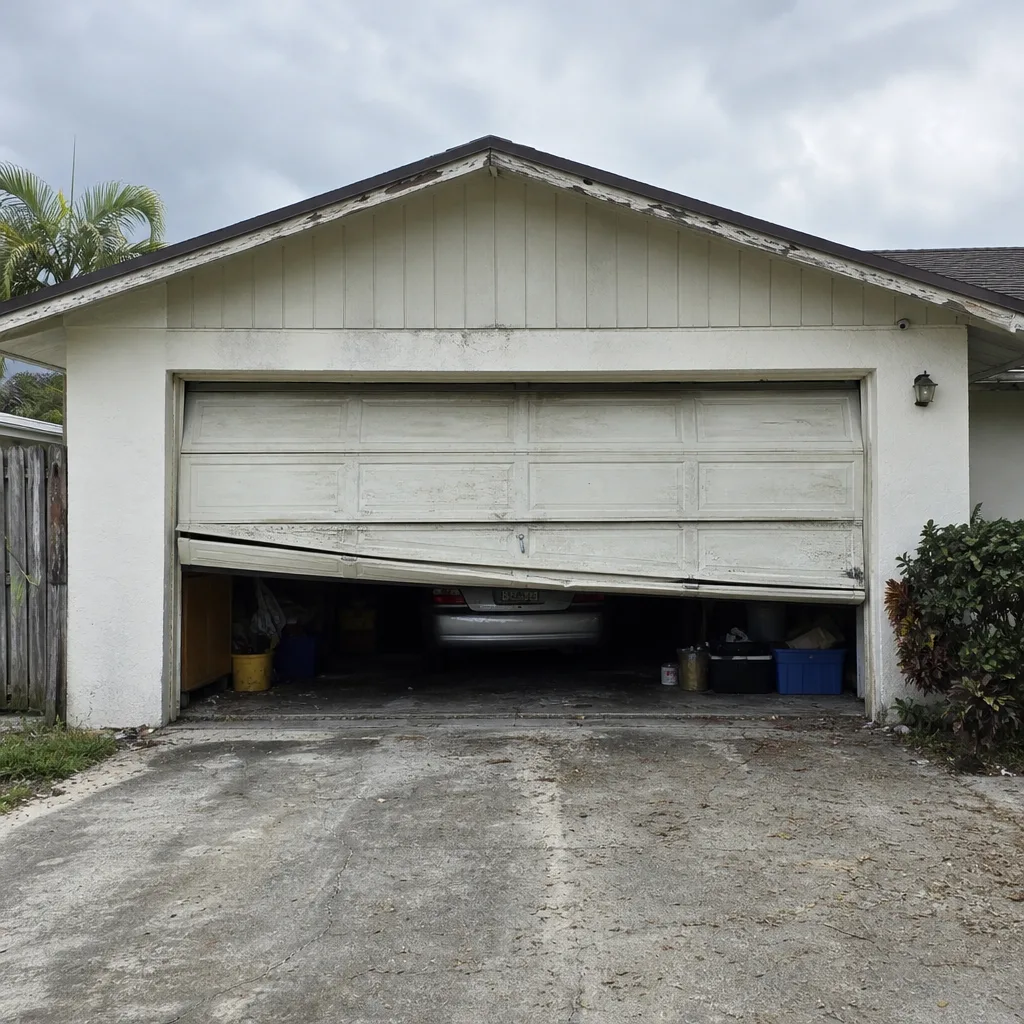 Before
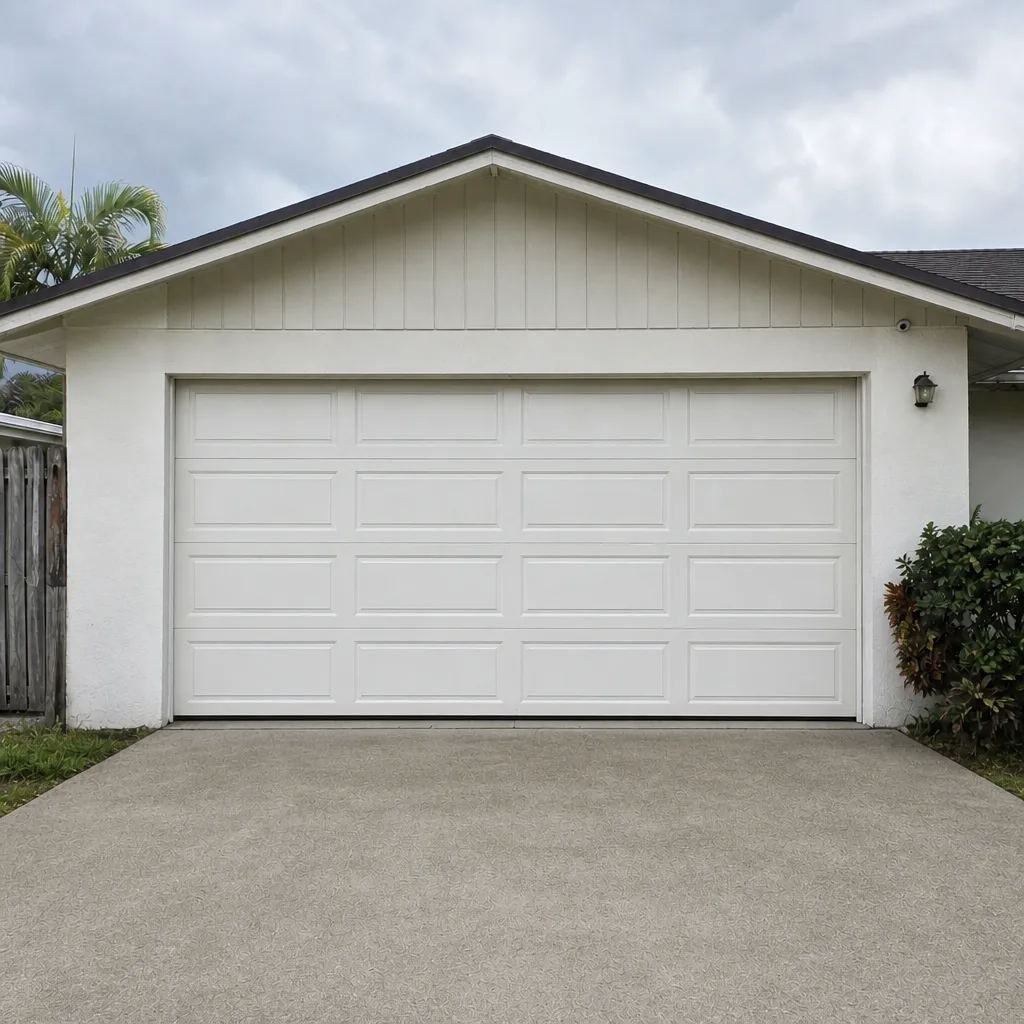 After
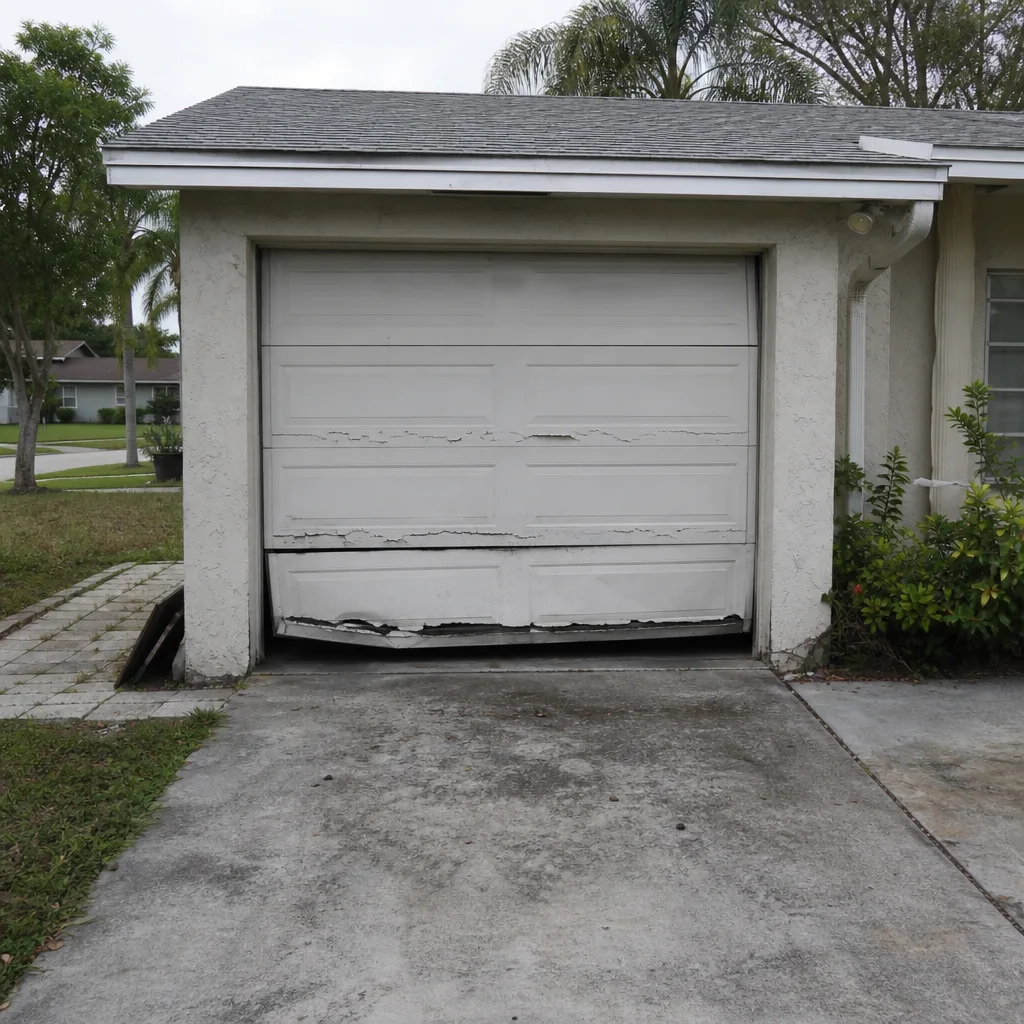 Before
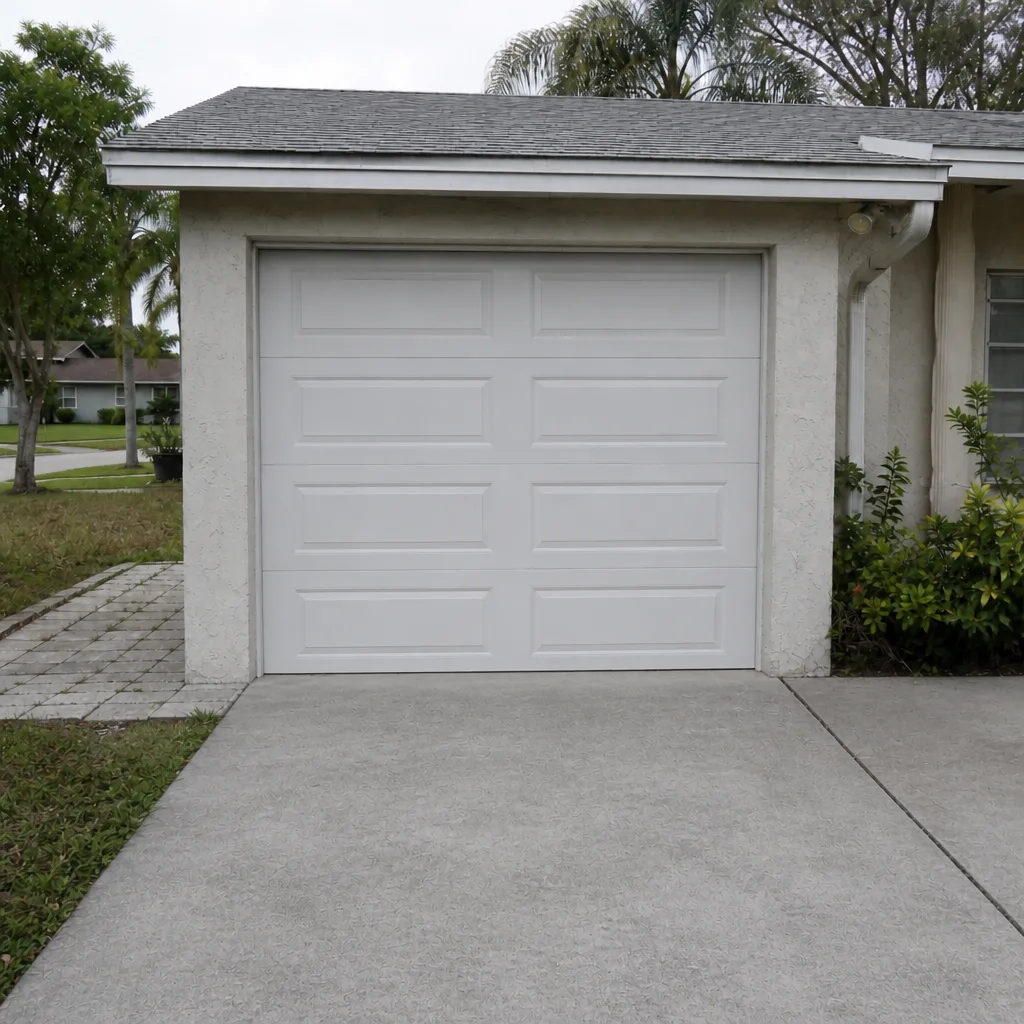 After
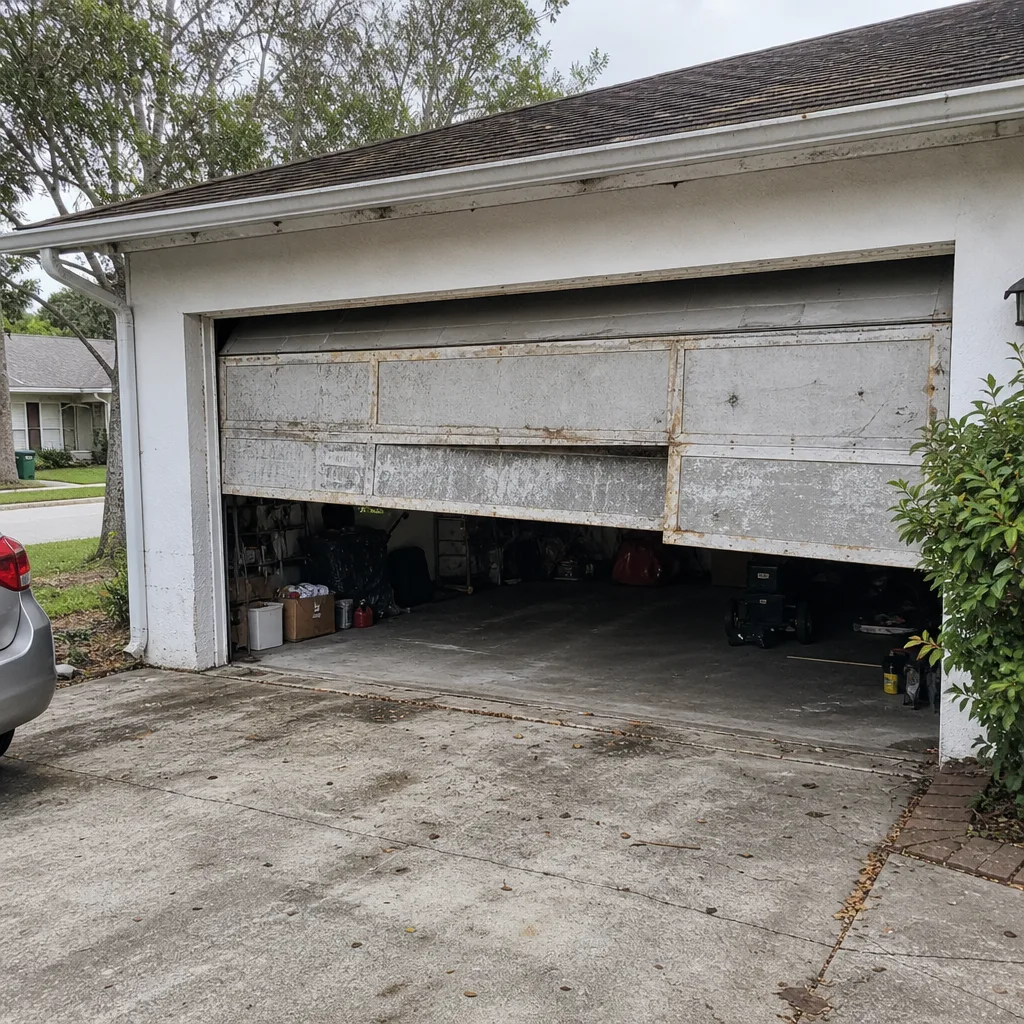 Before
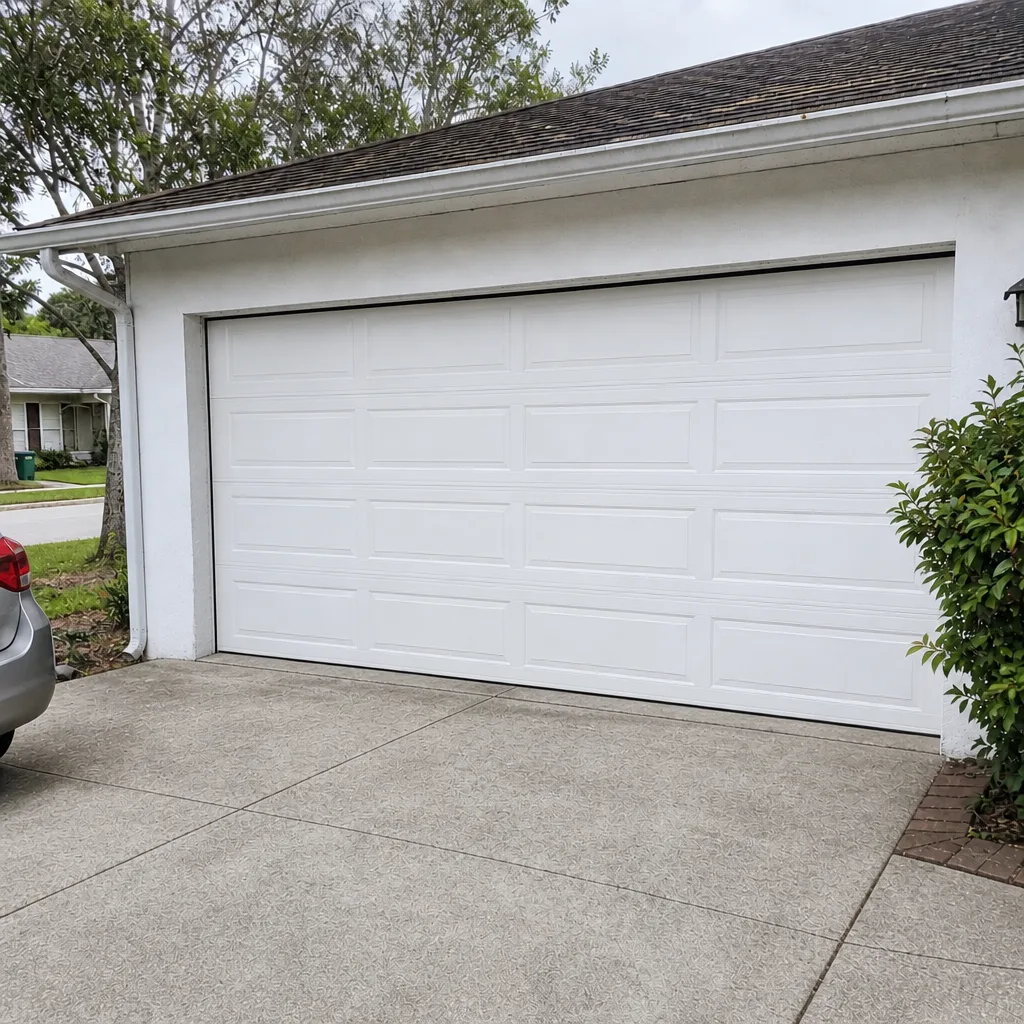 After
When to Call a Professional
Some tasks belong on your list. Some don’t. Call a technician when the door is out of balance, when a spring is broken or visibly stretched, when the opener trips the breaker or flashes error codes, when the door reverses without obstruction, or when the seal is so worn that water is entering the garage on rainy days. Call immediately if the door is stuck open after a storm or if the door’s cables are loose or off the drum, which is a safety issue, not a repair to put on next week’s calendar. Deerfield Beach Garage Door Repair Pros offers free estimates in Deerfield Beach. Call (855) 210-1282. Our technicians have up to 12 years of experience, and every job starts with a written quote agreed before any work begins.
Frequently Asked Questions
Once a year for a professional inspection of springs, cables, and door balance, plus seasonal DIY checks in spring, summer, and fall. Homes on the east side of US-1 near the Intracoastal should add an extra lubrication pass each month during the rainy season because the humidity accelerates hardware wear. Call (855) 210-1282 for an exact quote on a service visit; estimates are free.
Yes for the basics, no for bracing and spring work. You can check that seals are intact, test the opener’s safety reverse, lubricate hinges and rollers, and make sure nothing is loose. Bracing a door for wind load, checking spring condition, and confirming balance are technician tasks because those components are under tension and need the right tools. If your door isn’t currently wind-rated, that’s a bigger conversation best started well before storm season.
It stresses seals, drives moisture into hardware, and encourages corrosion on hinges and rollers. The main damage shows up as bottom seals that no longer keep water out, steel tracks that start to pit, and openers that behave erratically when water gets into the housing or a wall-plate connection. Regular lubrication, seal checks, and prompt attention to opener issues handle most of it.
The local professionals we connect you with are licensed and insured as their state requires. We work on eight major residential garage door and opener brands, including LiftMaster, Chamberlain, Genie, Clopay, Amarr, Wayne Dalton, Craftsman, and Raynor, so your technician arrives already familiar with the equipment in your garage. Call (855) 210-1282 for a free estimate.
No. The written quote you receive before any work begins is the price you pay. We quote based on what we find on inspection, and you approve the number before we start. If additional issues are discovered during the job, we stop and re-quote before continuing. Call (855) 210-1282 for a free estimate on your specific door.
In many cases, yes. Repair calls are something we can often fit the same day, with fast dispatch from 7am to 7pm. Emergency spring or opener failures get priority. Call (855) 210-1282 as early in the day as you can and we’ll confirm timing. Spring failures especially should not wait, because operating a door with a broken spring is unsafe.
The Bottom Line
Deerfield Beach doesn’t need four-season garage door care. It needs the right three cycles: hurricane prep in late spring, rainy-season seal and lubrication attention through the summer, and dry-season checks on wood composite and weatherstripping in the cooler months. Homes east of US-1 need a tighter schedule because of the humidity from the Intracoastal. The tasks you can handle yourself are the seasonal checks and the monthly lubrication pass. The tasks that belong with a technician are spring and cable inspections, balance checks, bracing questions, and anything the opener is telling you is wrong. Annual professional inspection is the fastest way to catch a failure before it happens.
If your seasonal checklist turns up something that needs a trained eye, or the door is doing something it didn’t do last month, call Deerfield Beach Garage Door Repair Pros at (855) 210-1282 for a free estimate. We work on the brands you already own, repair first whenever repair is the right answer, and quote the price before any work starts.
Written by the team at Deerfield Beach Garage Door Repair Pros.