Last updated November 20, 2026
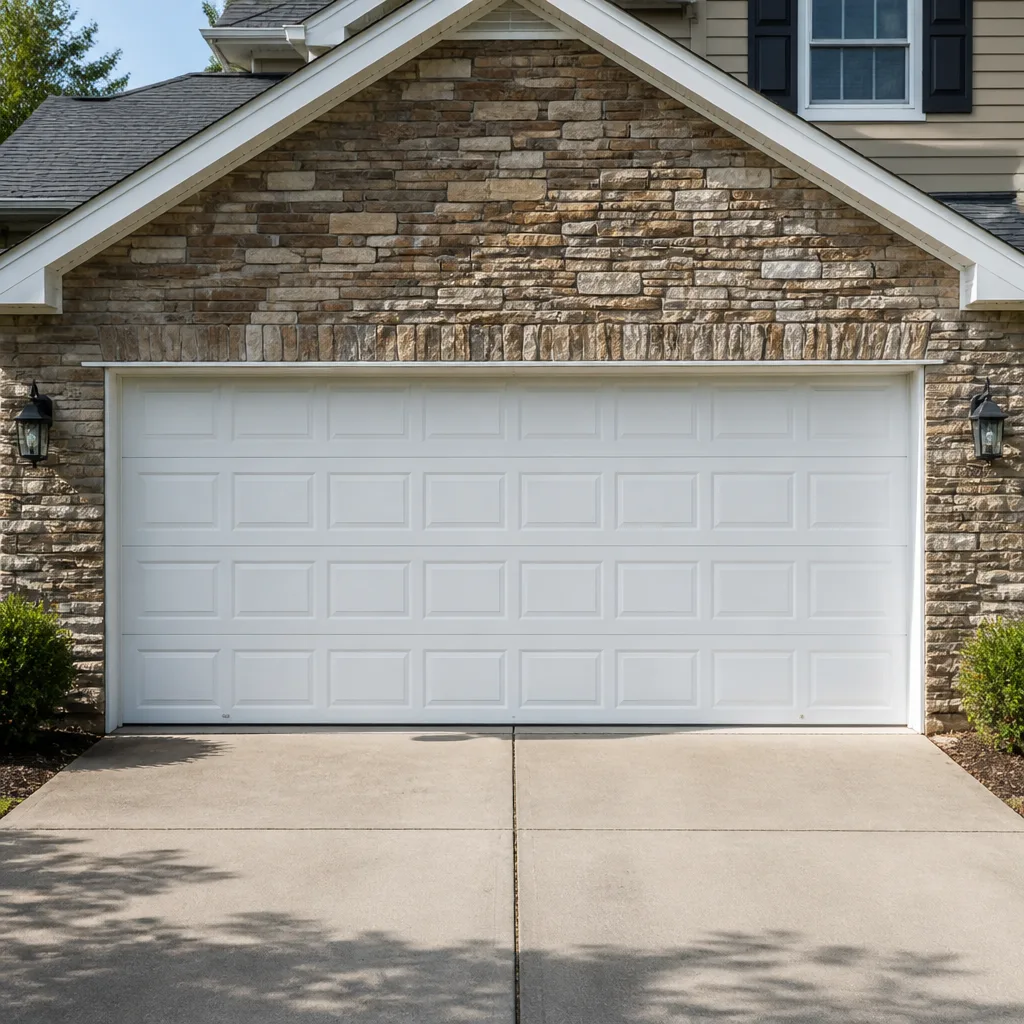 Raised-panel steel
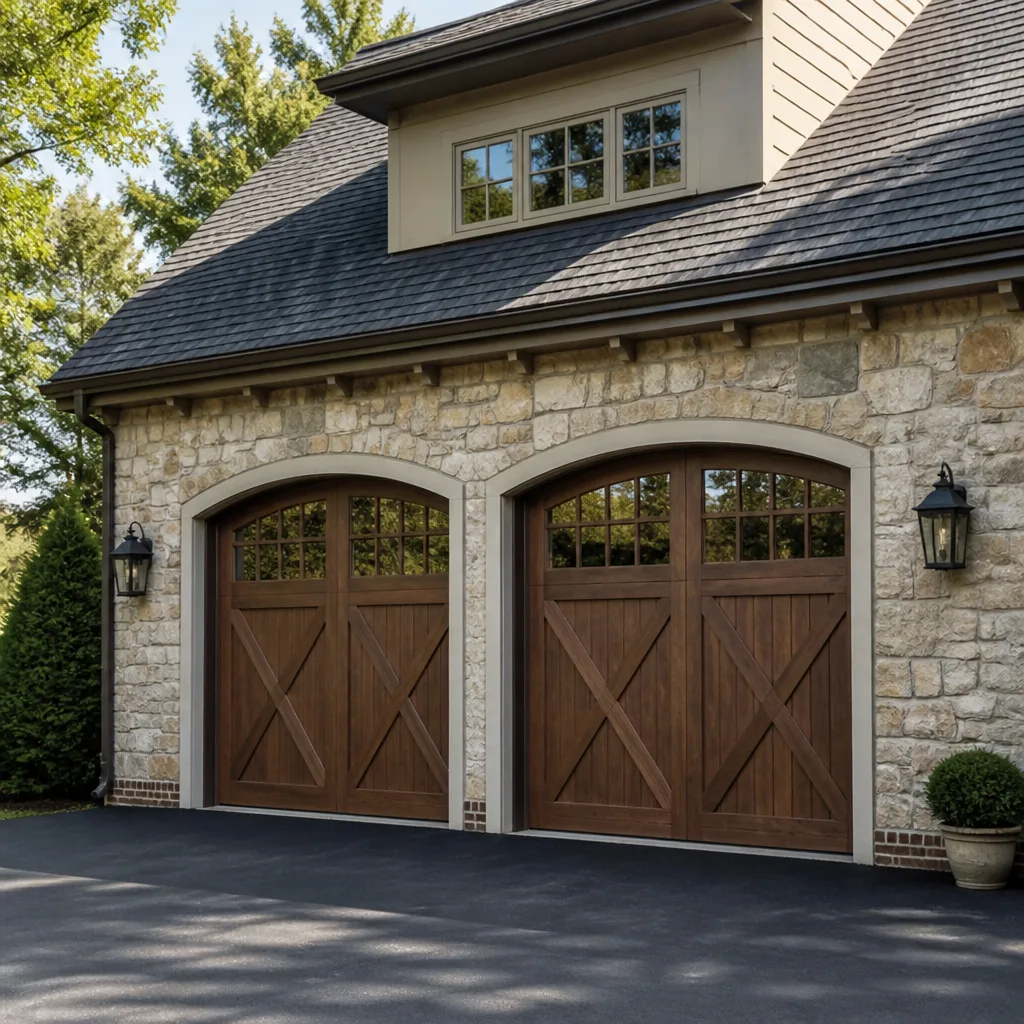 Carriage house
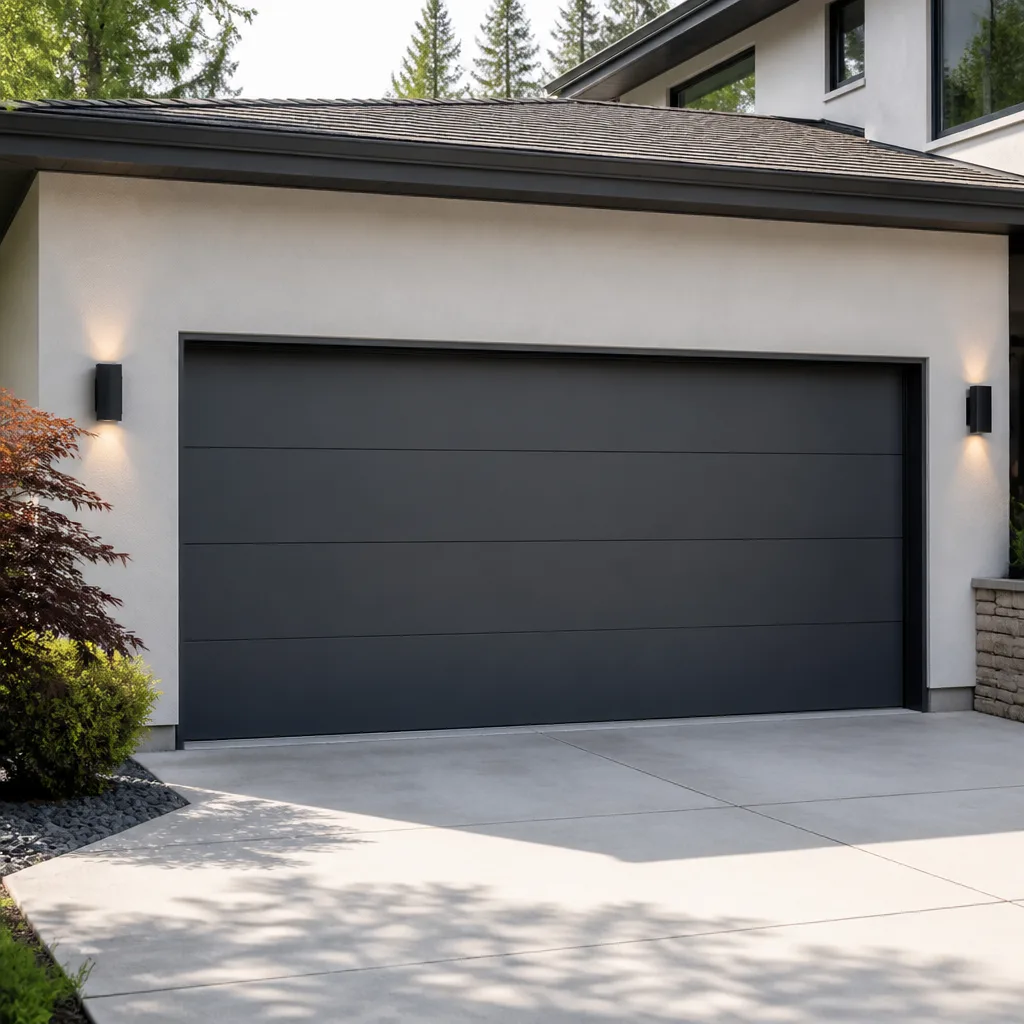 Modern flush
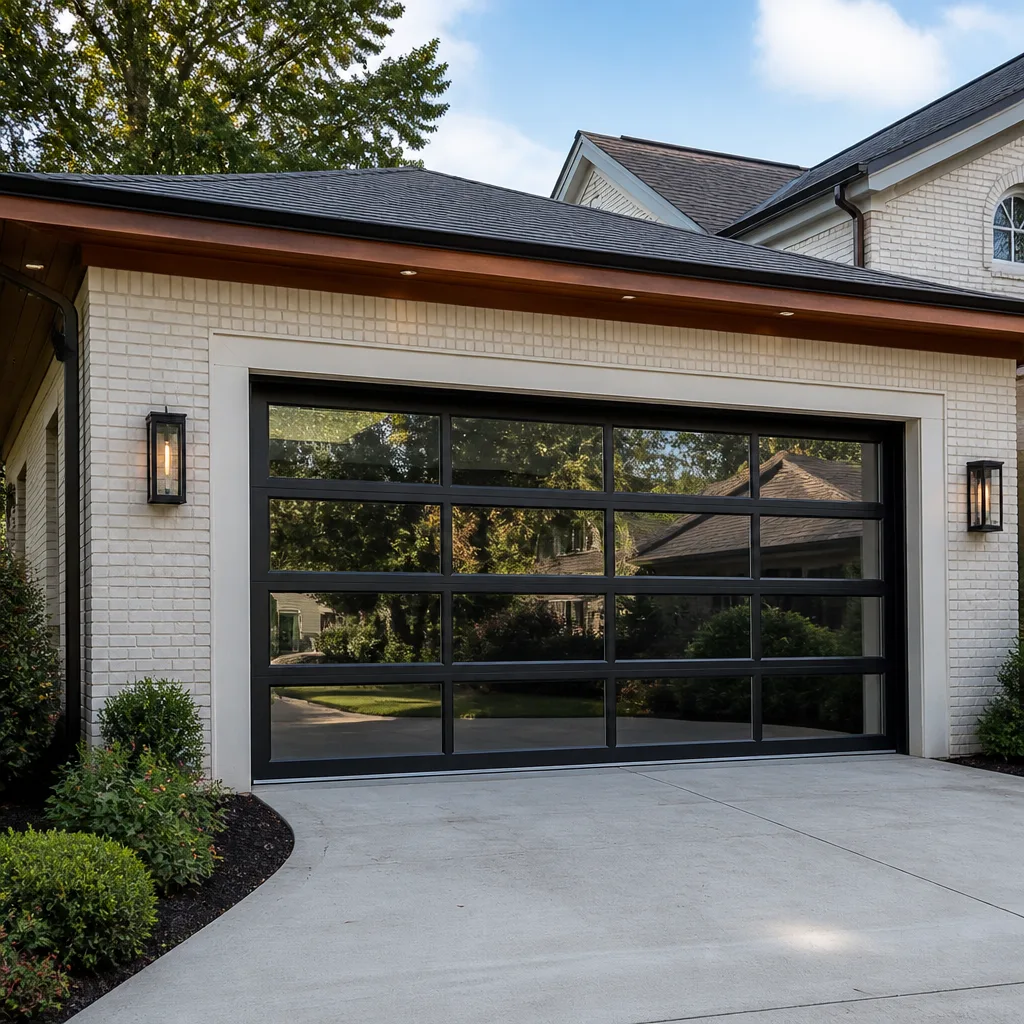 Full-view glass
 LiftMaster openers
 Chamberlain openers
Full 25-point door and opener safety check with every visit - springs, cables, rollers, tracks, and your LiftMaster or Chamberlain opener included
You get a price before we start. It does not change when the pro arrives.
Get your free estimateGarage Door Warning Signs: A Deerfield Beach Homeowner’s Reference Guide
Most garage doors don’t fail out of nowhere. They warn you first – a grind that wasn’t there last month, a half-second hesitation before the door drops, a rust streak blooming on a bottom panel. The trick is knowing which warnings are cosmetic, which are mechanical, and which mean you shouldn’t run the door again until someone looks at it. This guide is our symptom-to-cause reference for Deerfield Beach homeowners, built from what we actually find in garages around town. You’ll learn how to read sounds, movements, and visual clues, how to tell a weakening spring from a broken one, and how to sort the “call today” signs from the “schedule this week” ones.
Quick Answer
The most common garage door warning signs in Deerfield Beach are grinding or popping noises, a door that hesitates or reverses before closing, slow or uneven lifting, rust streaks and bubbling paint near the bottom rail, and visible gaps in the spring coils. Any popping sound followed by a door that won’t lift usually means a broken spring and calls for a same-day stop. Grinding, hesitation, and cosmetic wear can often wait for a scheduled visit – but not indefinitely.
Styles & brands we work with
- Raised-panel steel
- Carriage house
- Modern flush
- Full-view glass
- LiftMaster openers
- Chamberlain openers
Table of Contents
- The Symptom-to-Cause Index: What That Noise Is Telling You
- Florida-Specific Visual Signs: Rust, Bubbling Paint, and Mineral Deposits
- Weakening vs. Failed Springs: Why the Difference Matters
- Opener Behavior Patterns: Mechanical vs. Electrical Trouble
- The Hesitation Before Closing: Photo-Eye Alignment
- Call Today vs. Schedule This Week: Prioritizing Warning Signs
- Reading Warning Signs on Clopay, Amarr, Wayne Dalton, and Craftsman Doors
- A Simple Monthly Walk-Around for Deerfield Beach Homes
The Symptom-to-Cause Index: What That Noise Is Telling You
Sounds are the cheapest diagnostic tool you have. A garage door in good shape runs with a low, steady hum from the opener and very little else. When a new sound shows up, the pitch and rhythm usually point to the component responsible. Here’s how we map the common ones.
- Grinding, high-pitched and continuous: Usually the rollers or the torsion shaft bearings. When rollers dry out or the bearings lose lubrication, metal rides on metal through the whole travel of the door.
- Popping or a loud bang from the center of the door: Almost always a torsion spring. A single pop followed by a door that feels unusually heavy or won’t lift points to a break in the coil.
- Scraping along one side: The door is rubbing the track, often because a track has been nudged out of plumb or a roller has jumped its channel.
- Rattling that gets worse over bumps: Loose hinge bolts, a worn bottom bracket, or a panel that has started to separate from its stile.
- Clicking from the opener head unit: A relay or gear inside the opener rather than the door itself, common on older chain-drive units.
- Squealing that changes with door speed: A dry torsion spring or extension spring, or rollers that need lubrication.
In Deerfield Beach, humidity does a lot of the damage behind these sounds. Bearings and rollers that would stay quiet for years in a dry climate start grinding sooner here because moisture works its way into the fittings. That’s one reason a door that’s only a few years old can sound older than it is.
If a popping sound comes with a door that won’t lift, stop running it and call for garage door spring repair. A broken torsion spring leaves the entire door weight on the opener, and running it that way can damage the opener motor or the door’s panels. We treat spring calls as a safety priority, not a tune-up.
Florida-Specific Visual Signs: Rust, Bubbling Paint, and Mineral Deposits
South Florida’s heat and humidity put a specific kind of wear on a garage door that you won’t see in drier parts of the country. The signs show up first on the lower half of the door, where moisture collects and where the door takes the most punishment from rain blowing in under the header.
Rust streaks running down a steel door face are the first thing to watch. They usually start at a seam, a hinge screw, or the bottom rail and spread upward with each wet season. On a Clopay or Amarr steel door, that streak often means the factory finish has been breached at that point, and the bare metal underneath is oxidizing. Left alone, the rust works under the paint and the panel starts to pit.
Bubbling paint near the bottom rail is the next stage. When paint lifts in small blisters, moisture is trapped between the coating and the steel. That’s a repair-and-repaint issue for the door surface, not usually a structural failure, but it tells you the bottom seal is letting water in. A worn bottom seal is one of the least expensive fixes on a garage door and one of the most ignored.
White mineral deposits on hinges, rollers, and the torsion shaft look like chalky powder or crusty spots. Those are what’s left behind when water evaporates off the hardware, and they speed up wear on every moving part they touch. A wipe-down and a proper lubrication pass slows it down considerably.
- Rust streaks on the door face – usually a breached finish at a seam or screw
- Bubbling or flaking paint at the bottom rail – moisture trapped under the coating
- White crusty deposits on hinges and rollers – dried minerals speeding up wear
- Dark tracks or black streaks at the rollers – dried lubricant that has turned to grit
- Warped or swollen bottom seal – the source of most of the moisture problems above
None of these mean the door needs replacing. In our experience, most of the rust and paint problems we see in Deerfield Beach are surface issues that respond well to cleaning, sealing, and a new bottom seal – the repair-first approach rather than a new-door sales pitch.
Weakening vs. Failed Springs: Why the Difference Matters
A weakening spring and a failed spring are two very different situations, and the difference is about safety as much as repair timing. A weakening torsion or extension spring still holds the door up, but it’s lost some of its lifting power. A failed spring has snapped outright and holds nothing. One lets you schedule a visit. The other means the door shouldn’t be run at all.
Here’s how to tell them apart without touching the springs. Garage door springs sit under extreme tension, and the ones that hold the door’s weight should never be handled by a homeowner. You can read the symptoms from a safe distance:
- Test the lift by hand, carefully, with the door closed and the opener disengaged. Lift the door about a foot. A properly balanced door stays roughly where you leave it. If it feels unusually heavy or drops back down, the springs have weakened.
- Look for a visible gap in the coil. A torsion spring that has broken usually shows a clean gap of a couple of inches somewhere along its length. Extension springs that have snapped often hang loose or show a stretched, deformed section.
- Listen for the pop. A snapped spring makes a loud bang, and the door afterward won’t lift with the opener or will only lift a few inches before stopping.
- Check the door for a tilt or sag. If one side of the door drops lower than the other when raised, or the door hangs crooked at rest, one spring has likely failed or weakened unevenly.
Why the distinction matters: a weakened spring is a maintenance item, and a failed spring is a hazard. Running the opener against a snapped spring forces the motor to lift the full weight of the door, which can bend the door’s panels, strip the opener’s gears, or bring the door down unexpectedly. If you suspect a break, leave the door alone and call.
One more point specific to matched pairs. Torsion springs are usually installed in pairs, and when one breaks, the other has typically lived the same life and is close behind. We almost always recommend replacing both together, because a pair costs roughly twice what a single spring does, and doing them at once avoids a second service call in a few months. For a proper assessment, our garage door spring repair page walks through the process step by step.
Opener Behavior Patterns: Mechanical vs. Electrical Trouble
When an opener starts acting up, the first question is whether the problem lives in the opener or in the door. A door that’s out of balance, has a dry roller, or a weak spring puts extra load on the opener, and the opener shows the strain. Before assuming the motor is dying, look at the door itself.
Here’s how we separate mechanical symptoms from electrical ones on the openers we see in Deerfield Beach homes:
- Slow lift, especially in warm weather: Usually mechanical load, not the motor. A door that lifts slowly is fighting friction – worn rollers, dry hinges, or a weakening spring. Warm weather can make a marginal spring feel worse, since metal expands and the door gets heavier against the spring’s effort.
- Reversal mid-travel, before the door reaches the floor: Often the safety sensors or the limit switch rather than a failing motor. If the door reverses partway down and the sensors look clear, the opener’s travel limits need adjustment.
- Grinding or growling under load: Usually the opener’s internal gears, most often on older chain-drive Craftsman or Genie units. The plastic drive gear wears out and the motor spins against a stripped gear.
- Remote works sometimes, not others: Interference or a weak battery in the remote, or a worn logic board. On LiftMaster MyQ and Chamberlain MyQ units, it can also be a connectivity issue between the opener and the app.
- Opener hums but doesn’t move the door: Either the door is jammed (check the tracks and springs first) or a capacitor has failed in the motor.
Smart openers add a whole category of symptoms that have nothing to do with the motor. If a LiftMaster MyQ or a Genie Aladdin Connect unit won’t respond to the app but works fine from the wall button, the door hardware is fine and the problem is the network or the module. That’s an opener issue, and it belongs with garage door opener repair, not door repair. We handle both legacy RF remotes and the app-connected systems across the brands we work on.
One diagnostic habit worth building: if the opener seems weak, disconnect it and test the door by hand. If the door is heavy, the opener is fine and the door needs service. If the door is light and smooth and the opener still struggles, the opener is the problem.
The Hesitation Before Closing: Photo-Eye Alignment
A garage door that hesitates for half a second before closing isn’t “getting old.” It’s frequently a photo-eye alignment problem, and it’s one of the cheapest, fastest fixes on a garage door. The safety sensors sit a few inches off the floor on both sides of the door opening, and they talk to each other with an invisible beam. When that beam is interrupted or the two eyes are out of line, the opener refuses to close the door – and in a lot of cases, the motor keeps trying anyway, working harder each time.
The hesitation often gets worse over weeks, and homeowners learn to work around it by holding the wall button down or nudging the door by hand. That workaround masks the problem while the opener compensates, and eventually the strain catches up with the motor, the logic board, or the door’s travel limits. The cost of realigning the eyes is trivial next to replacing an opener.
Symptoms that point to the photo-eyes:
- Door closes partway, then reverses to the open position
- Door won’t move at all when you press the close button, but opens fine
- An LED on one sensor blinks or stays dark
- Door hesitates, then closes, but only after a second or two
- Door works from the wall button but not the remote (the sensors and the remote are separate systems)
The alignment itself is usually a simple adjustment to one sensor’s bracket – a small nudge until the indicator lamp on the receiving eye goes solid. If the sensors are lined up and the door still hesitates, the problem is usually in the opener’s logic board or the wiring between the sensors and the opener, and that’s where a trained technician earns the call. For a diagnostic walk-through of your specific unit, call us and we’ll walk you through what to check.
Call Today vs. Schedule This Week: Prioritizing Warning Signs
Not every warning sign deserves the same urgency, and knowing which is which saves you money and keeps you safe. Here’s our rough triage, sorted by how quickly we’d want to look at it.
Call today – stop using the door:
- A loud pop followed by a door that won’t lift (broken spring)
- A door hanging visibly crooked or with one side dropped
- Cables that look frayed, kinked, or slack
- A door that comes down on its own, or reverses partway and won’t close at all
- The opener running with the door stuck – the motor will overheat or strip its gears
Schedule within the week – the door still works, but it’s telling you something:
- Grinding or squealing from the rollers or torsion shaft
- A door that lifts noticeably slowly or unevenly
- A hesitation before closing, or a door that reverses once in a while
- An opener that hums without moving the door
Put it on the list – cosmetic or early-stage wear:
- Rust streaks on the door face that haven’t spread
- Bubbling paint at the bottom rail
- White deposits on hinges and rollers
- A worn bottom seal letting in water
When you call, describe the sound and the behavior – “a pop then the door got heavy,” or “the door reverses before it reaches the floor.” That kind of detail saves the technician a step and helps us bring the right parts. We treat spring calls as urgent, because a broken spring is a genuine safety issue, and we treat the cosmetic items as planned maintenance for a scheduled visit.
Reading Warning Signs on Clopay, Amarr, Wayne Dalton, and Craftsman Doors
Different brands wear in different ways, and knowing what you own helps you decode a warning sign faster. The good news is we work on the brand you already have – Clopay, Amarr, Wayne Dalton, and Craftsman among them – so we arrive already familiar with the hardware in your garage rather than learning it on your dime. Here’s how warning signs tend to show up on each.
Clopay. Clopay steel doors are common on Deerfield Beach homes and their warning signs usually show up in the panel finish. A breach at a hinge screw starts a rust streak that runs down the door face in a wet season. On the door’s mechanical side, Clopay doors on a torsion system tend to announce a weakening spring as an uneven lift – one side of the door rises faster than the other.
Amarr. Amarr doors are built around sturdy steel, and the wear pattern we see most is at the bottom rail and the hinges. Bubbling paint around the bottom rail usually points to a leaking bottom seal, which is common in Florida’s humidity. The bottom bracket is worth checking too – it takes most of the cable’s load at the door’s lowest point.
Wayne Dalton. Wayne Dalton doors often show their early warning signs in the tracks and the panel alignment. A Wayne Dalton door that starts scraping on one side is usually indicating a track that has drifted out of plumb, and that’s often fixable with a realignment rather than a new track. On models with the brand’s torsion system, a pop followed by a heavy door is the same spring failure we described earlier.
Craftsman. Craftsman is best known for openers, and Craftsman opener warning signs tend to be mechanical first: a growl under load that points to a stripped drive gear, or a door that moves slowly in warm weather. On the door side, Craftsman-branded doors typically follow the standard steel-door wear patterns – rust at the seams, worn rollers, a tired bottom seal.
Whatever the brand, the rule is the same: the sign tells you which component is complaining, and the component is what we fix. We don’t push new doors when a roller, hinge, or spring repair solves the problem. For a broader look at the doors and hardware we handle in town, our garage door repair page covers the repair categories.
A Simple Monthly Walk-Around for Deerfield Beach Homes
A few minutes a month catches most garage door problems while they’re still cheap to fix. Set a reminder, then walk through these steps. You’re looking and listening, not disassembling anything.
- Run the door up and down once, listening. New sound? Note where in the travel it happens – at the start, in the middle, or at the close.
- Look at the springs from the ground. A gap in a torsion coil or a deformed extension spring is a stop-running sign.
- Check the cables on each side. They should be straight and evenly tensioned. Frayed, kinked, or slack cables mean call a technician.
- Run a hand along the door’s bottom rail. Rust, bubbling paint, or a swollen bottom seal means moisture is getting in.
- Wipe the hinges and rollers. White mineral dust means water is sitting on the hardware; a light lubrication pass slows the wear.
- Test the photo-eyes. Wave a hand through the beam with the door open; the door should refuse to close. If it closes anyway, the sensors need attention.
- Watch the door close completely. It should meet the floor squarely, without a gap on one side or a hesitation before the final drop.
Once a season, add a balance test: disengage the opener and lift the door by hand. It should rise easily and stay put where you leave it. A door that feels heavy or drops back means the springs have weakened – not failed, but declining. That’s the moment to schedule rather than wait for the pop.
For the broader repair catalog and how we handle each type of job in Deerfield Beach, the Deerfield Beach Garage Door Repair Pros homepage is a good starting point, or call (855) 210-1282 and we’ll help you sort the symptoms into a next step.
Common Mistakes to Avoid
- Working around a hesitation instead of fixing it. Holding the wall button down to force the door closed masks a photo-eye or limit-switch problem while the opener burns itself out compensating. Fix the sensor instead.
- Forcing a door with a suspected broken spring. A snapped torsion or extension spring is under extreme tension, and running the opener against it can bend panels or strip the drive gears. Stop using the door and call.
- Replacing the opener when the door is the problem. A slow, struggling door is often fighting friction from worn rollers or a weakening spring, not a dying motor. A new opener on a bad door just wears out faster.
- Ignoring rust and bubbling paint until the panel pits. In Deerfield Beach’s humidity, a small rust streak at a hinge screw turns into a pitted panel within a season. Early treatment is a repaint, not a new panel.
- Assuming a failing spring will be obvious. A weakening spring usually doesn’t pop or make noise – it just makes the door heavier. A hand-lift balance test catches it before it fails.
- Trusting a general handyman with spring work. Springs demand specialist tools and training. A general handyperson isn’t equipped for torsion springs, and the risk of injury is real.
- Treating a rare reversed door as “just a glitch.” A door that sometimes reverses on its own is a safety problem with the sensors or limits. It gets more frequent, not less.
See the difference
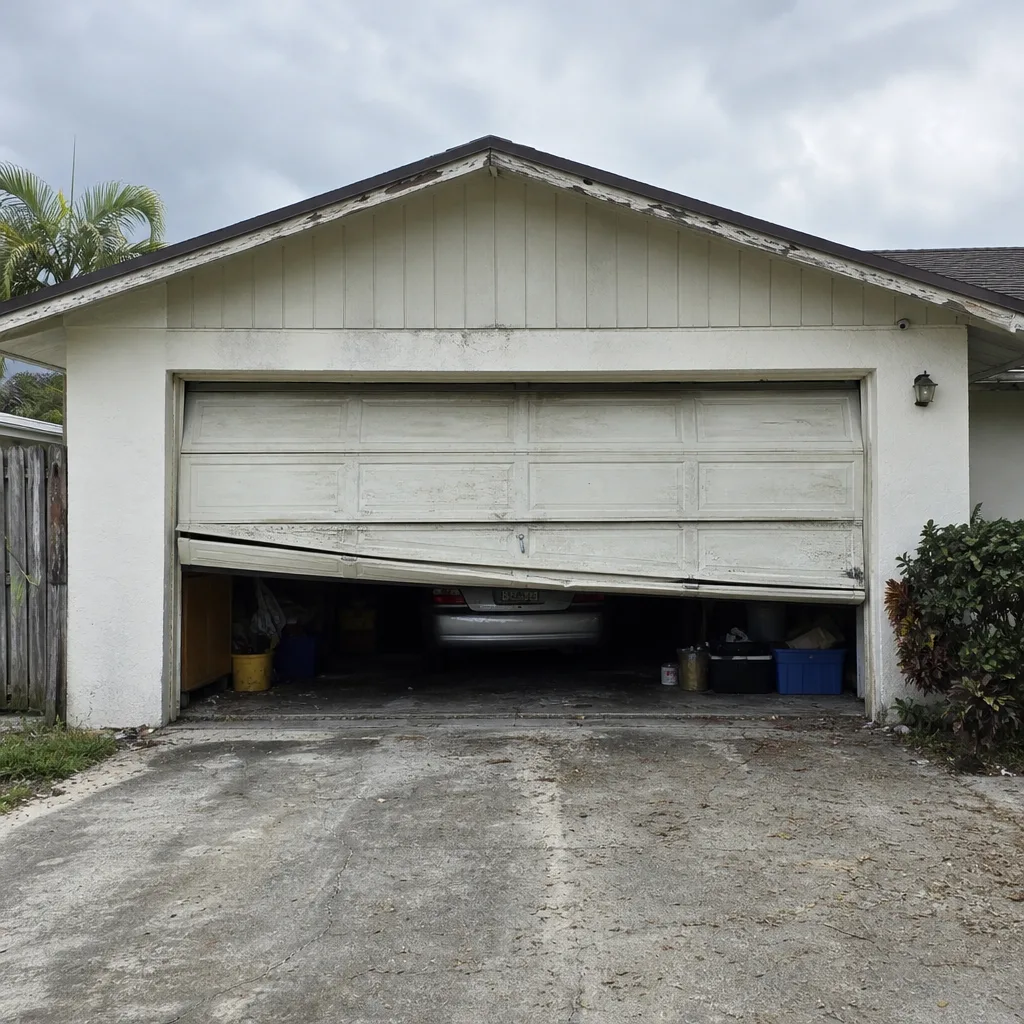 Before
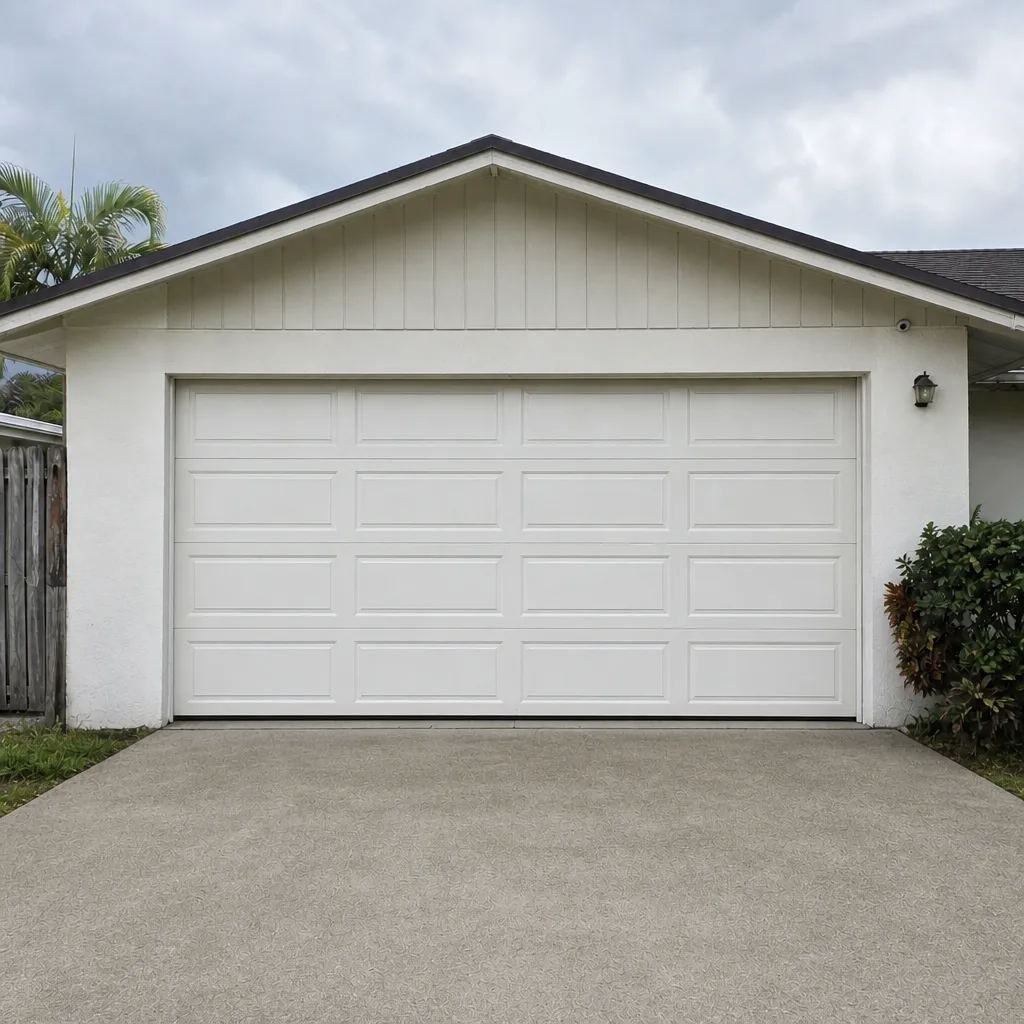 After
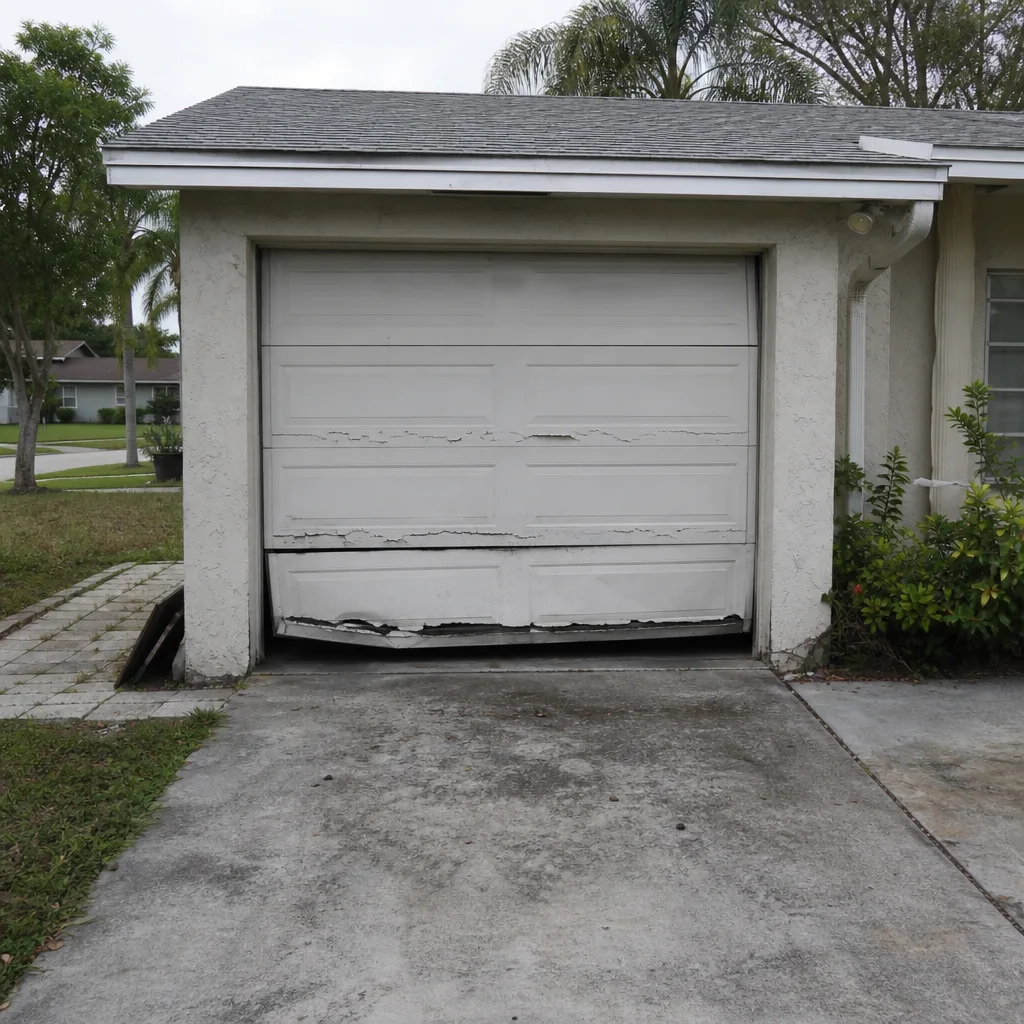 Before
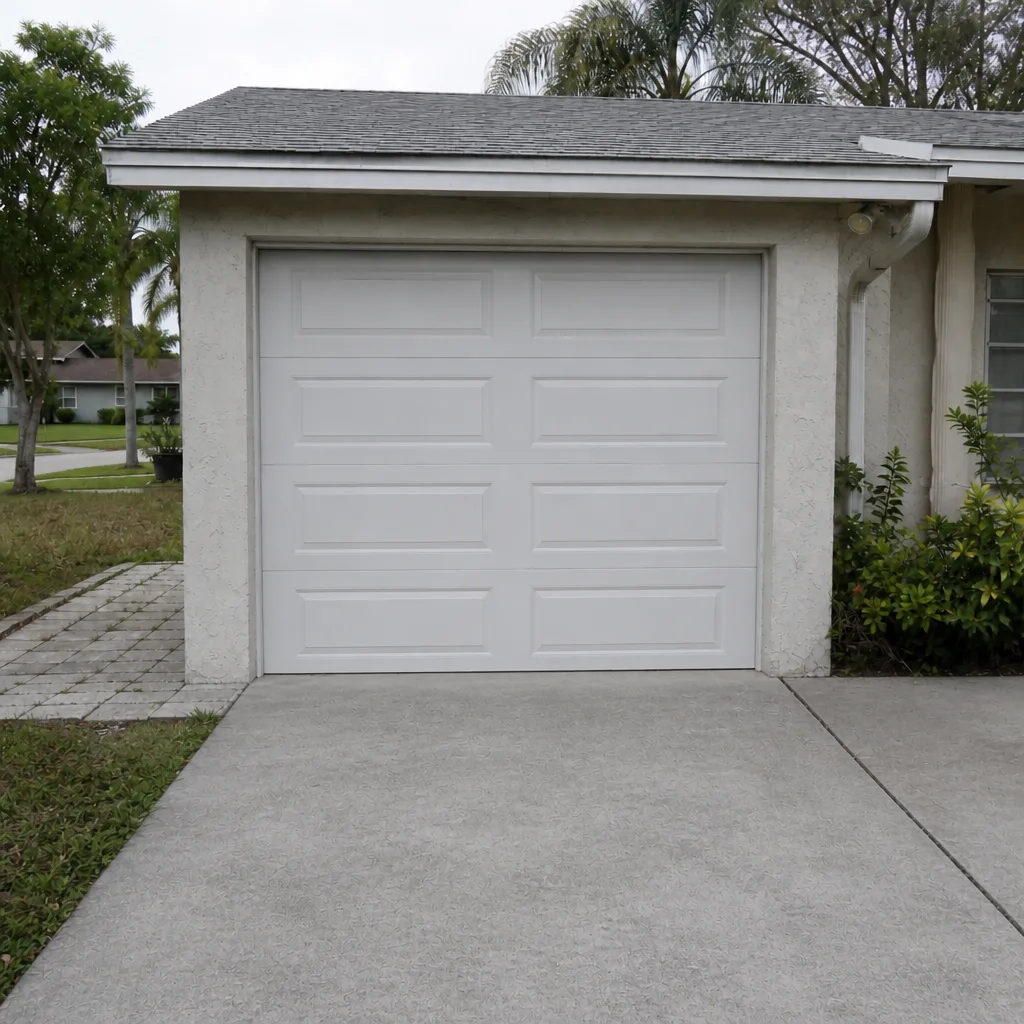 After
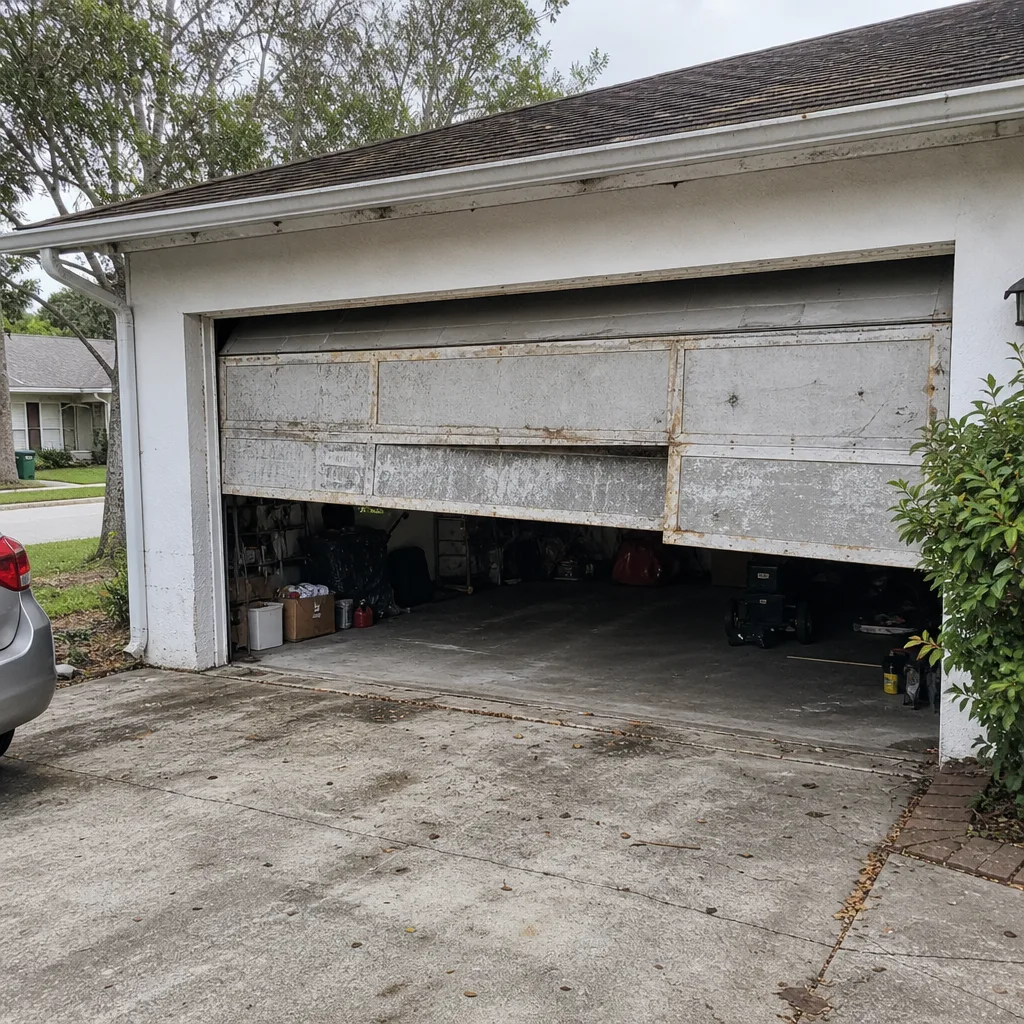 Before
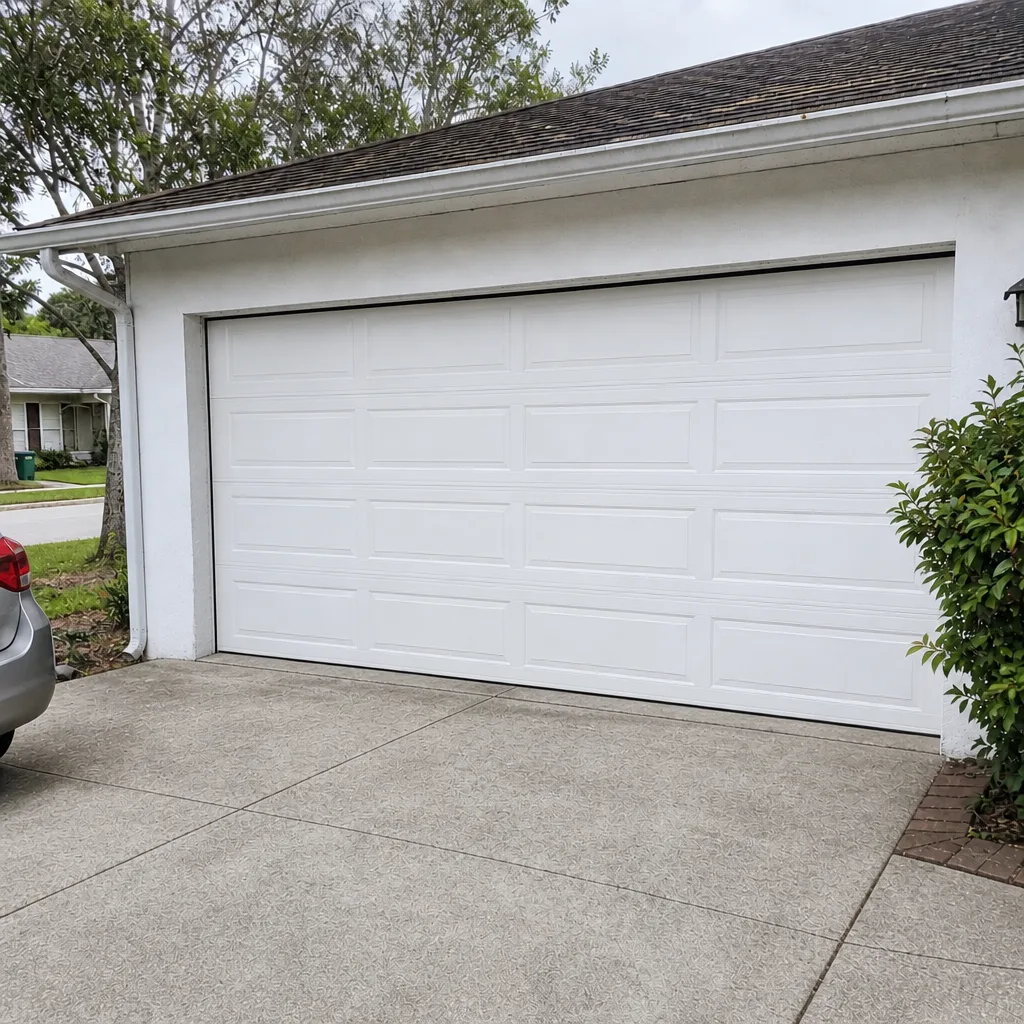 After
When to Call a Professional
Call a professional the moment a warning sign involves a spring, a cable, or a door that comes down on its own. Those three are the high-tension and control failures that a homeowner shouldn’t troubleshoot by hand. A pop followed by a door that won’t lift, a visibly crooked door, a frayed or slack cable, or a door that reverses partway are all “call today” symptoms, not “schedule” symptoms. For those, the door should be left alone until a trained technician has looked at it.
The “schedule this week” signs are grinding, slow lifting, a hesitation, or an opener that hums without moving the door. Those problems still work, but they’re wearing other components as they wait.
Deerfield Beach Garage Door Repair Pros works on the eight major residential brands – Clopay, Amarr, Wayne Dalton, Craftsman, LiftMaster, Chamberlain, Genie, and Raynor – so we arrive already familiar with the hardware in your garage. Our three services are garage door repair, opener repair, and spring repair, and every one is built around fixing what you have. If you’re not sure which category your symptom falls into, call and describe it to us. We’ll tell you what to watch for and how soon to book. Free estimates in Deerfield Beach – call (855) 210-1282.
Frequently Asked Questions
The most common warning signs are grinding or popping sounds, a door that hesitates or reverses before closing, slow or uneven lifting, rust streaks and bubbling paint near the bottom rail, and a visible gap in the spring coils. In Deerfield Beach, humidity speeds up the rust and mineral-deposit problems, so hardware wear tends to show up earlier than it would in a drier climate.
A weakening spring still holds the door: it feels heavy when you lift the door by hand with the opener disengaged, but the door comes up. A broken spring is a snap or pop followed by a door that won’t lift at all, and you’ll often see a visible gap in the torsion coil or a loose extension spring. A weakened spring is a scheduled repair; a broken one means stop using the door and call. Our technicians handle garage door spring repair with the safety protocols these high-tension parts demand.
Don’t ignore it. That hesitation is usually a photo-eye alignment issue, and it’s often a 10-minute fix – but if you work around it by holding the button down, the opener keeps compensating and the motor or logic board can wear out. It’s worth having the sensors checked and realigned. Call (855) 210-1282 and we’ll walk you through what the indicator lights mean.
Slow lifting in warm weather usually points to mechanical load on the door, not a failing motor. A weakening spring, dry rollers, or worn hinges put more resistance on the opener, and the extra heat makes the door feel heavier against whatever spring effort remains. The first step is the hand-lift balance test, then a look at the rollers and springs.
We work on eight of the most common residential brands: LiftMaster, Chamberlain, Genie, Clopay, Amarr, Wayne Dalton, Craftsman, and Raynor. That includes both legacy and smart-home opener systems, so whether you have a LiftMaster MyQ, a Chamberlain MyQ, or a Genie Aladdin Connect, we’re already familiar with the hardware.
In most cases, yes. Grinding, popping, a hesitant close, rust, and worn seals all point to specific components – springs, rollers, hinges, photo-eyes, openers – that can be repaired or replaced on their own. Our repair-first approach means we diagnose the actual failed part rather than recommending a new door. For a full rundown of the repair categories, see our garage door repair page.
The Bottom Line
Garage doors rarely fail without warning. A new grind, a pop, a half-second hesitation, or a rust streak is the door telling you which component is starting to give. The job of a homeowner is to know which signs are cosmetic, which are mechanical, and which are the high-tension safety issues that mean stop running the door. Read the sounds, watch the movement, check the hardware once a month, and do the hand-lift balance test each season. For the cosmetic items, put them on a maintenance list. For the grinding and hesitation, schedule a visit. For a spring, a cable, or a door that comes down on its own, call the same day. Deerfield Beach Garage Door Repair Pros works only on garage doors – that’s door repair, opener repair, and spring repair on the eight major residential brands – and we’re best at the diagnosis that fixes the door you already have. Our technicians have up to 12 years of experience. Call (855) 210-1282 for a free estimate.
Written by the team at Deerfield Beach Garage Door Repair Pros.